Interdisciplinary Aesthetics Project × Teacher Training Committee Special Issue 15 | Healing Yourself with Music: From Listening to Expression—"Music Therapy Self-Care for College Students II" Lecture
2026/04/23
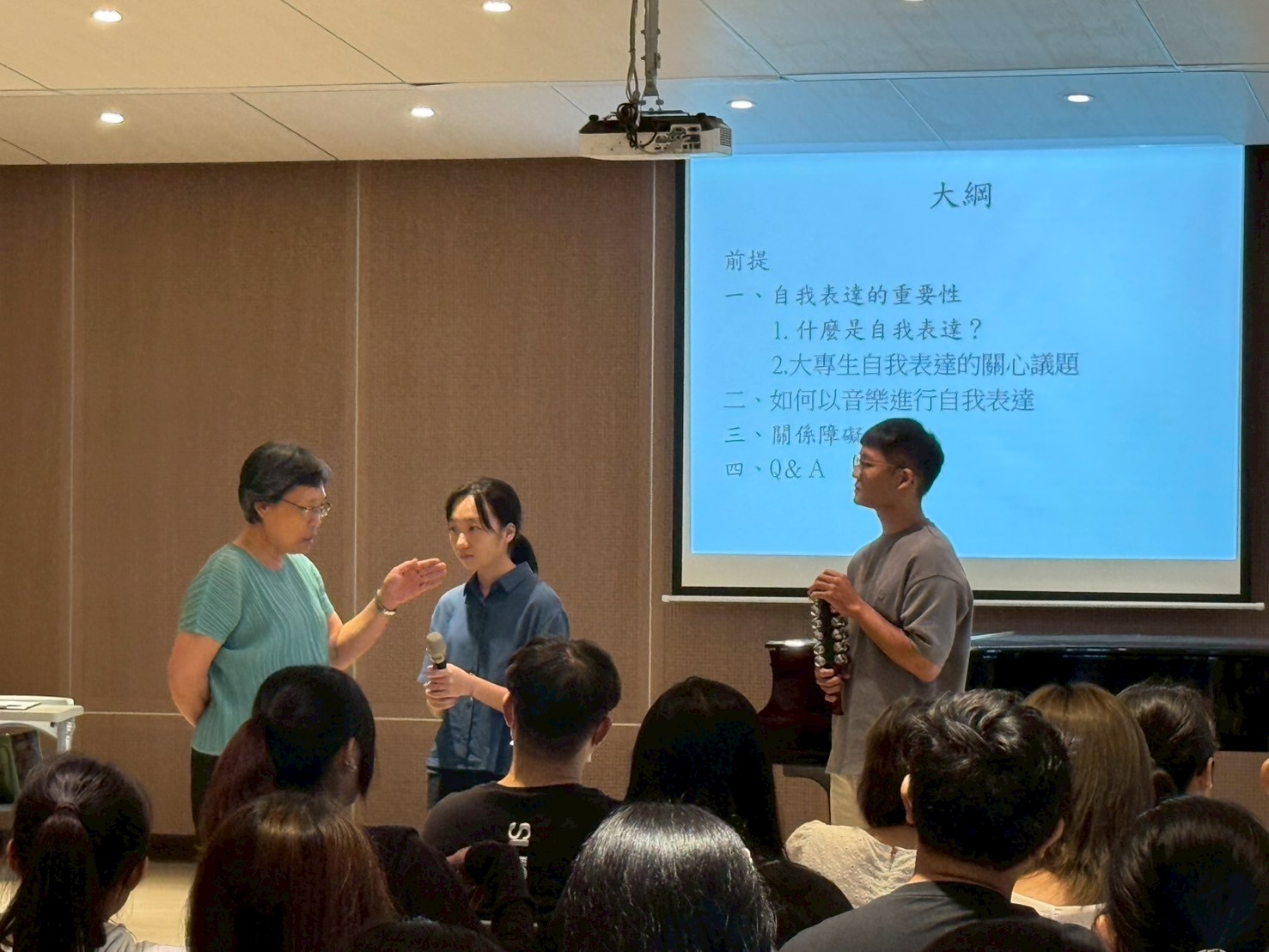
Social-emotional learning (SEL), which emphasizes self-awareness and emotion regulation, is not limited to the linguistic and cognitive levels but can also be genuinely felt through musical experiences. Assistant Professor Huang Ching-fang of National Tainan University, a member of the teacher training committee, planned this lecture and specially invited Professor Chang Nai-wen to lead college students in practicing non-verbal musical improvisation using instruments such as handbells and African drums to express feelings and build connections. This class not only helped students achieve inner healing through listening and creation but also demonstrated to teacher trainees the innovative possibilities of integrating SEL into interdisciplinary aesthetic education.
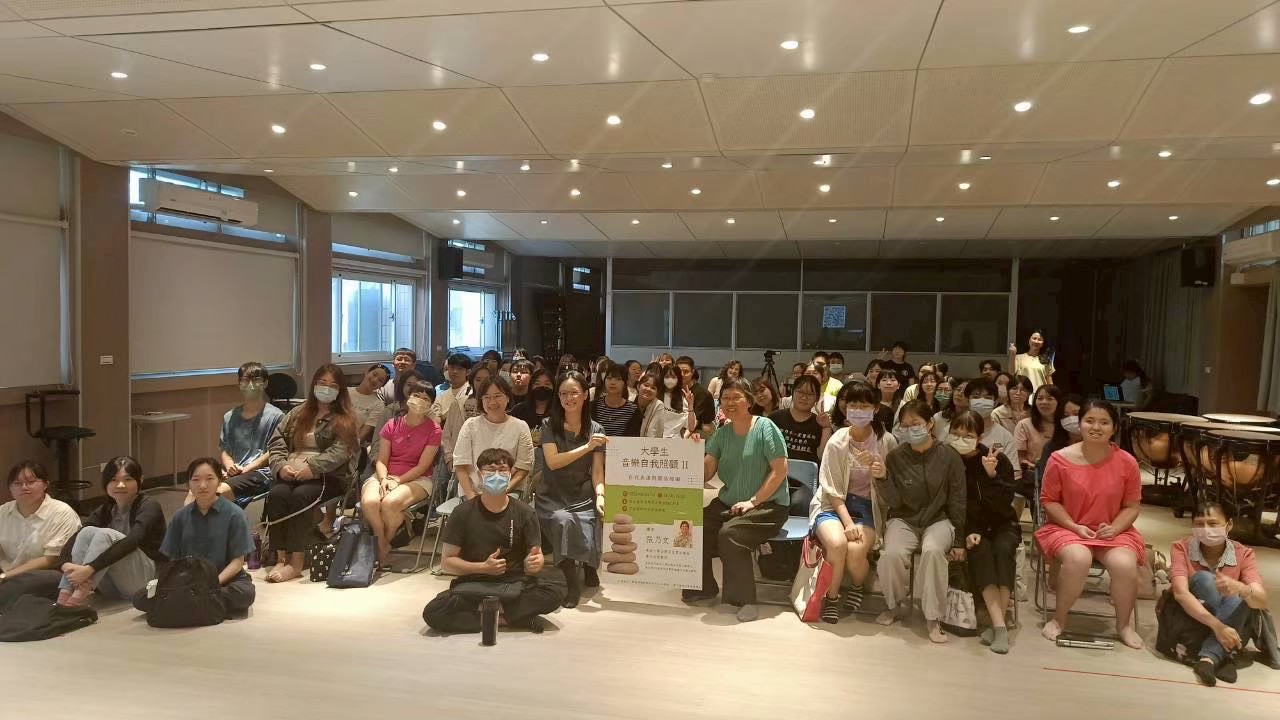
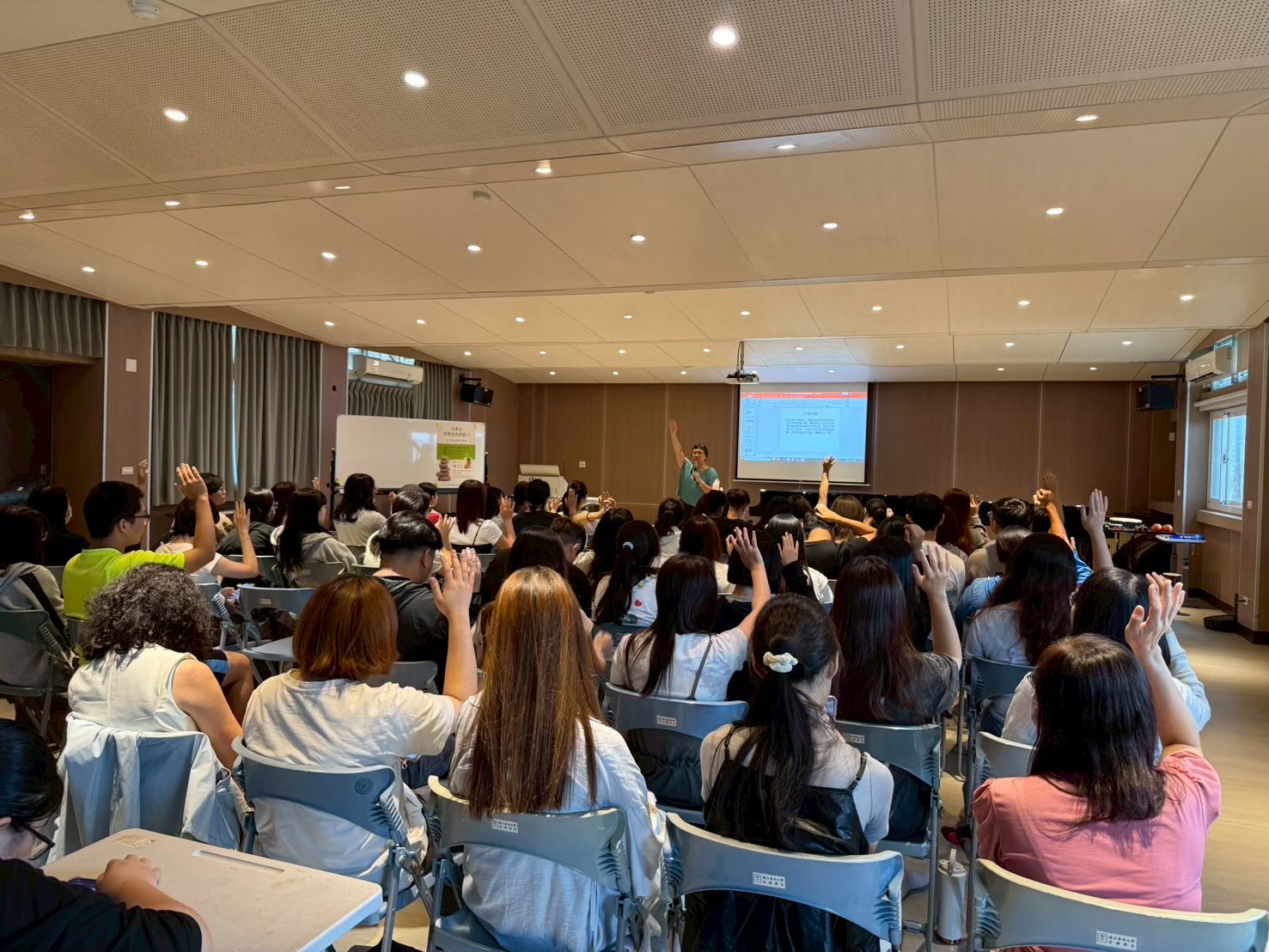
"Self-expression" is an indispensable part of the university learning process and one of the core competencies of social-emotional learning (SEL). On September 24, 2025, the Department of Music at National Tainan University held a lecture entitled "Music Therapy Self-Care for College Students II". Professor Nai-Wen Chang from the Department of Music at Tunghai University was invited to guide students to explore the deep connection between emotional expression and interpersonal relationships through sound, rhythm, and body, from the professional perspective of music therapy.
The lecture, centered on "Awareness and Expression," saw Professor Zhang Naiwen point out that music therapy is not only a clinical technique but also a process of self-understanding and emotional regulation. During the activity, students practiced expressing their emotions using instruments such as handbells, snowbells, and African drums. Through the sounds, dynamics, and tempos of these instruments, they genuinely experienced how music can serve as a medium for emotional release and self-awareness.
During the activity, Ms. Zhang also emphasized that "music is not just an auditory experience, but also a process of integrating mind and body." She guided students to think about how behaviors such as "listening to music," "singing," and "creating" can become ways of self-care and emotional regulation in daily life, helping participants reconnect with themselves and others through music and achieve inner healing.
This lecture combined theory and practice, allowing students to experience firsthand how the core competencies of SEL—self-awareness, social awareness, and interpersonal relationships—can be naturally expressed in musical activities. Student feedback indicated that through musical improvisation and interaction, they not only relaxed but also gained a better understanding of how to express feelings nonverbally.
This event, planned by Professor Huang Jingfang of the Department of Music at National Tainan University, is part of an interdisciplinary aesthetic education and SEL (Self-Learning and Emotional Education) integration course. It aims to inspire faculty members, students, and university students to value self-care and emotional education through the application of music therapy, allowing the connection between "self-music-society" to continue to shine in the teaching setting.