2026 International Conference on Educational Innovation | Workshop on "Exploring the Role of Life through Applied Creativity" Concludes Successfully
2026/09/24
The 2026 International Conference on Educational Innovation, organized by Parenting World, was held yesterday (September 23) at the Taipei Cultural and Creative Park. The morning session, themed "AI×SEL: Building the Future of Learning," explored the integration of technology and education. CEOs, education officials, experts, and scholars, through survey reports and panel discussions, emphasized the importance of interpersonal connections, emotional awareness, and slow thinking in the AI era. They also discussed how education can combine technological power with uniquely human qualities amidst the rapidly changing technological landscape.
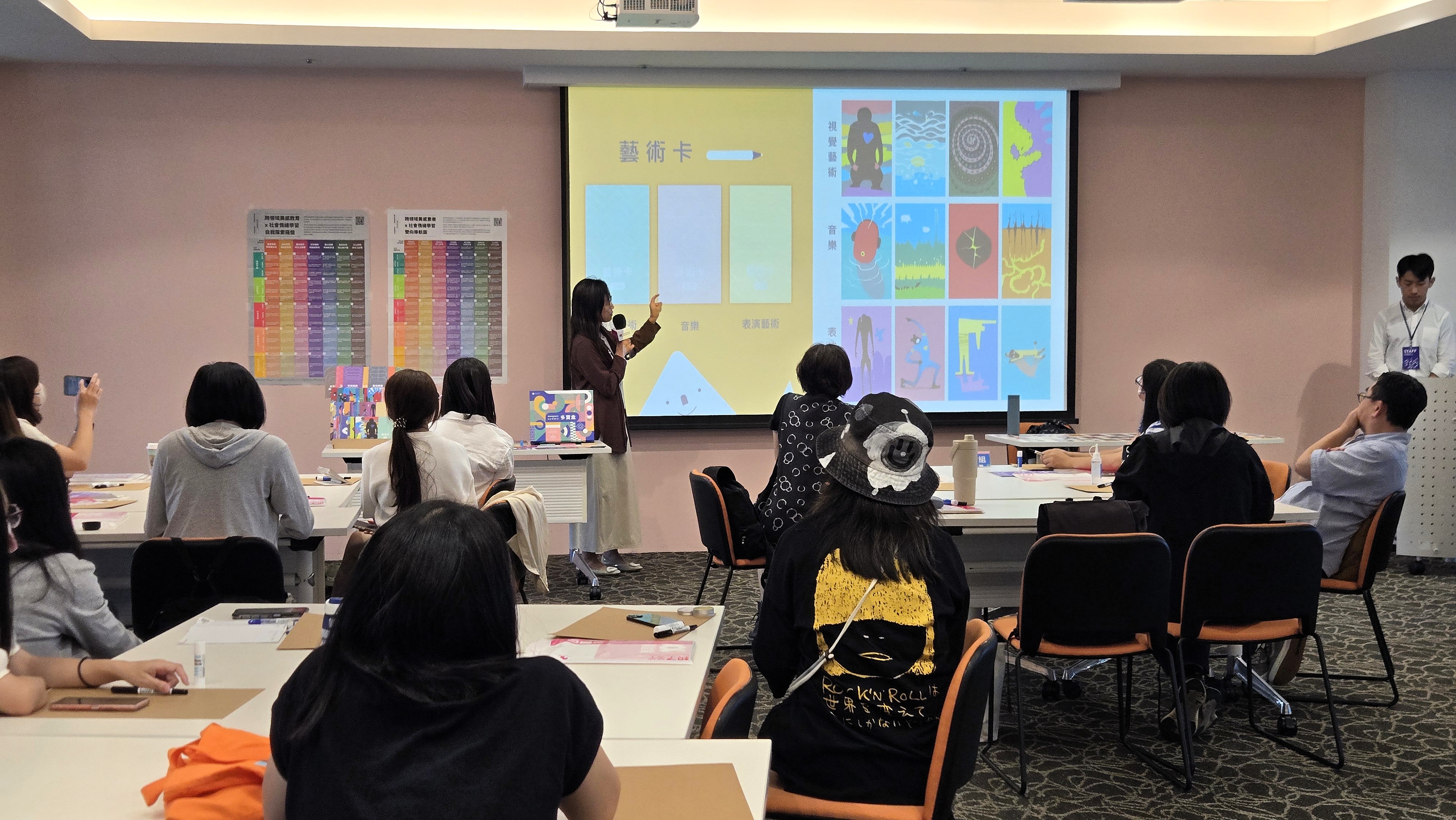
Later in the afternoon, classroom B hosted a workshop titled "Exploring Life Roles Through Creative Applications," presented by the project team.
First, Associate Professor Chen Yunwen, co-host of the interdisciplinary aesthetic education project, introduced the "Treasure Box" teaching materials, emphasizing the dialogue between social-emotional learning (SEL) and aesthetic education. Through wordless image art, reflective question cards and task cards, and expansion kits covering people and self, society, and nature, the materials help teachers guide students to conduct emotional awareness and self-interpretation in the classroom.
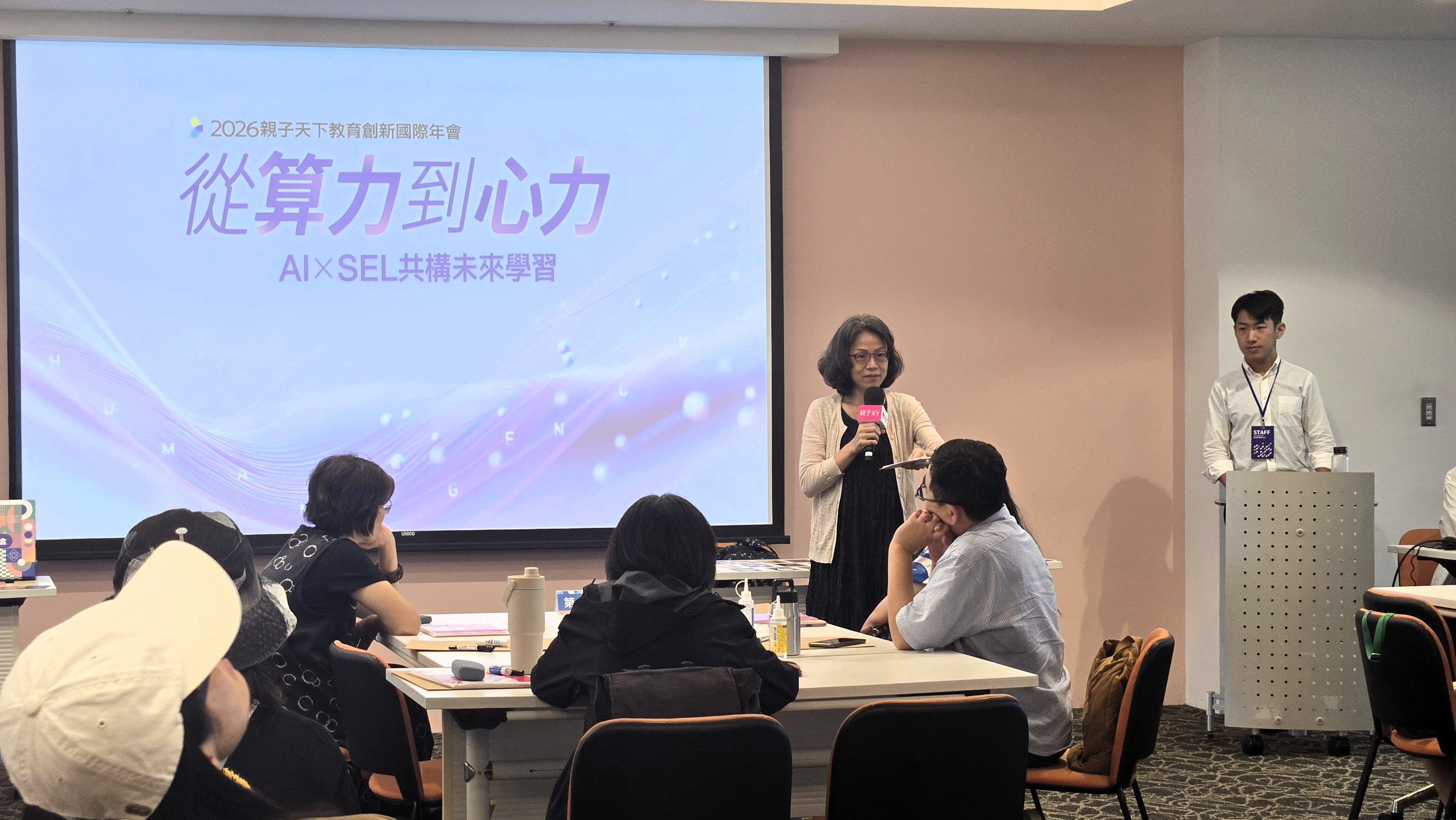
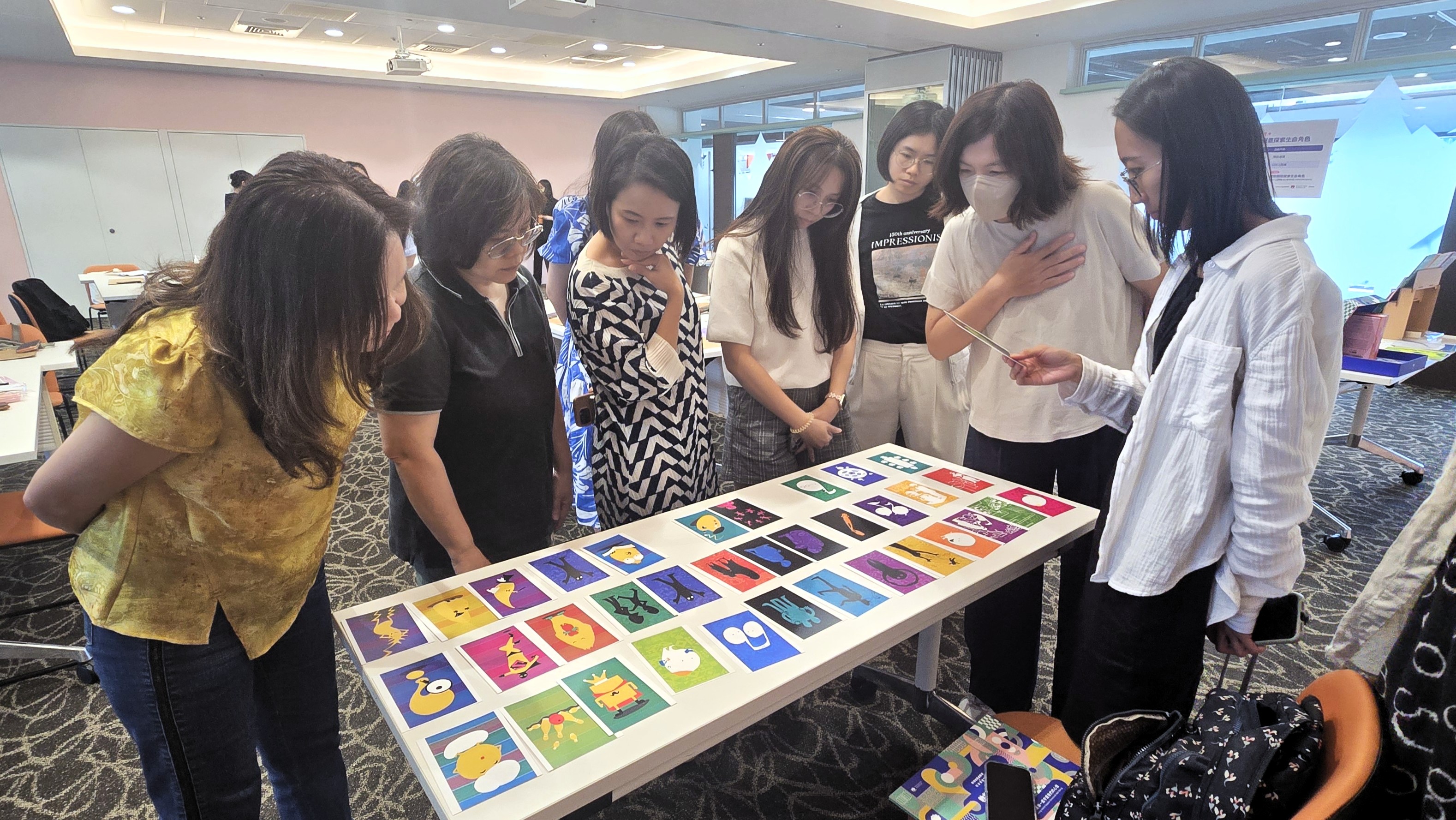
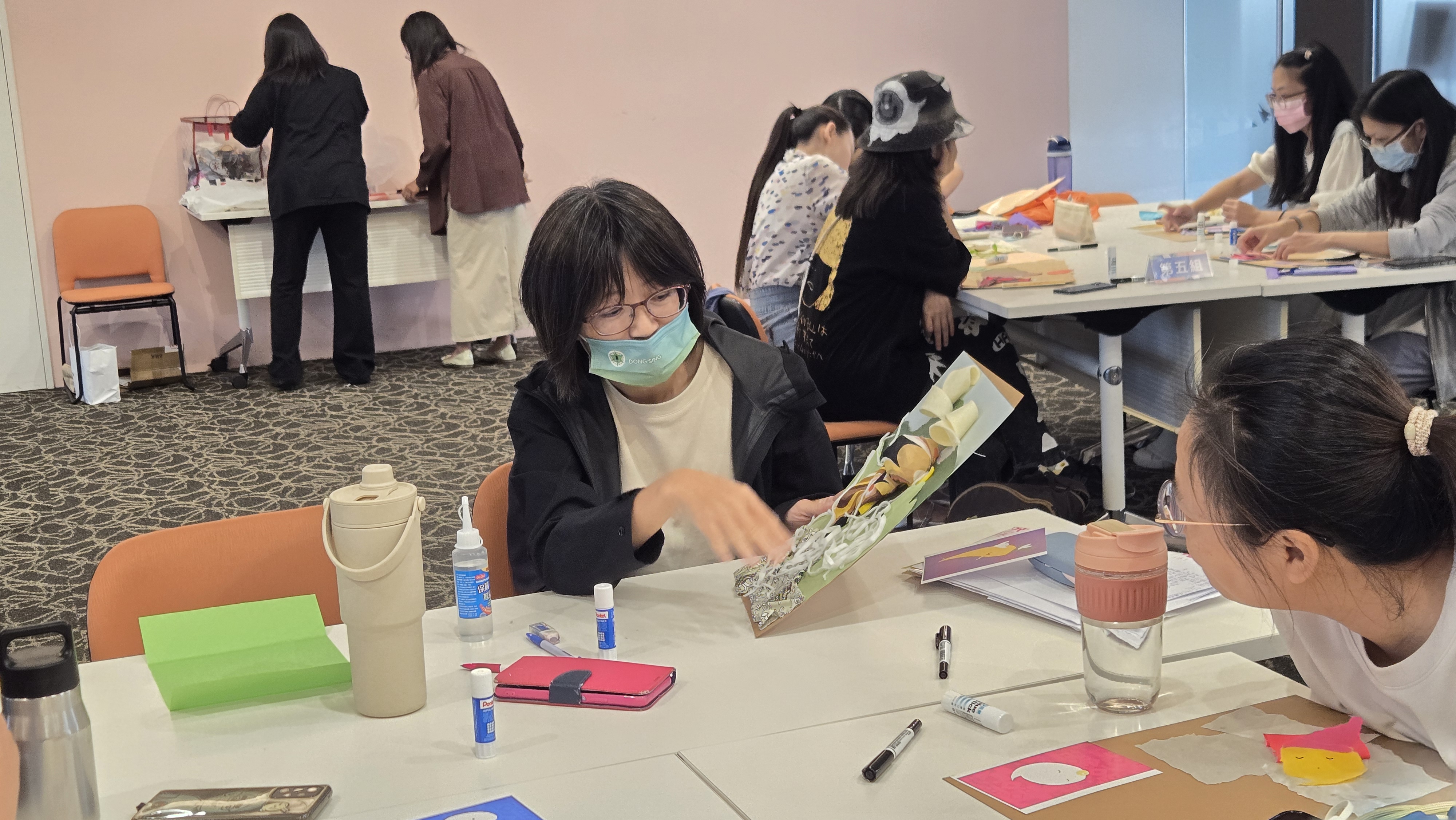
In practical terms, Ms. Tsai Wen-fang, an art therapist/supervisor at the Counseling Center of National Taipei University of the Arts, was invited to guide participants in discussing the multi-dimensional traits of the character cards they drew, combining Jungian archetypes with SEL self-awareness. Participants then selected cards and, without the constraint of scissors, created collages using scraps of fabric and colored cotton paper, engaging in dialogue with the card characters and experiencing the characteristics of materials, shifting perspectives, and the process of error tolerance.
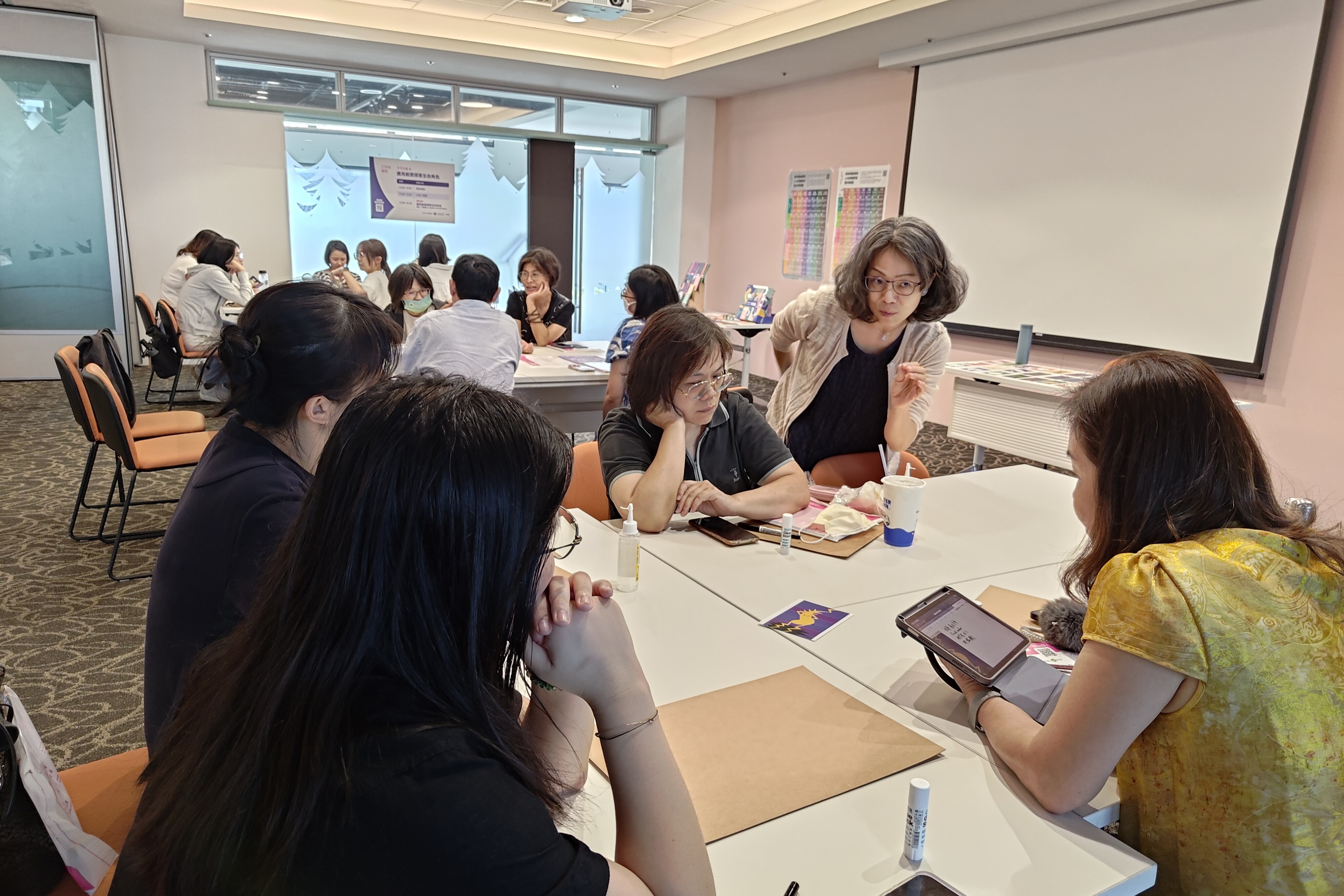
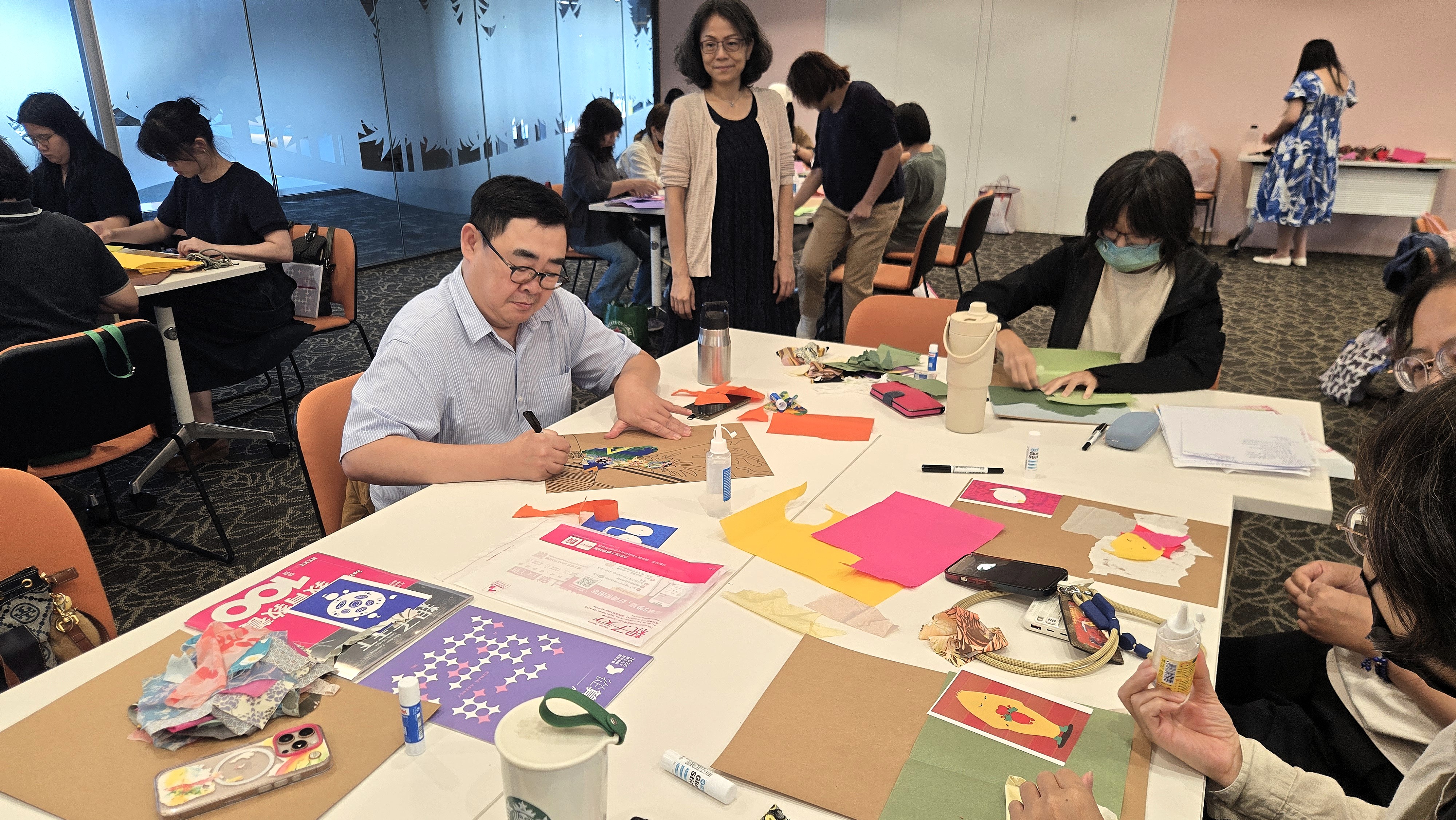
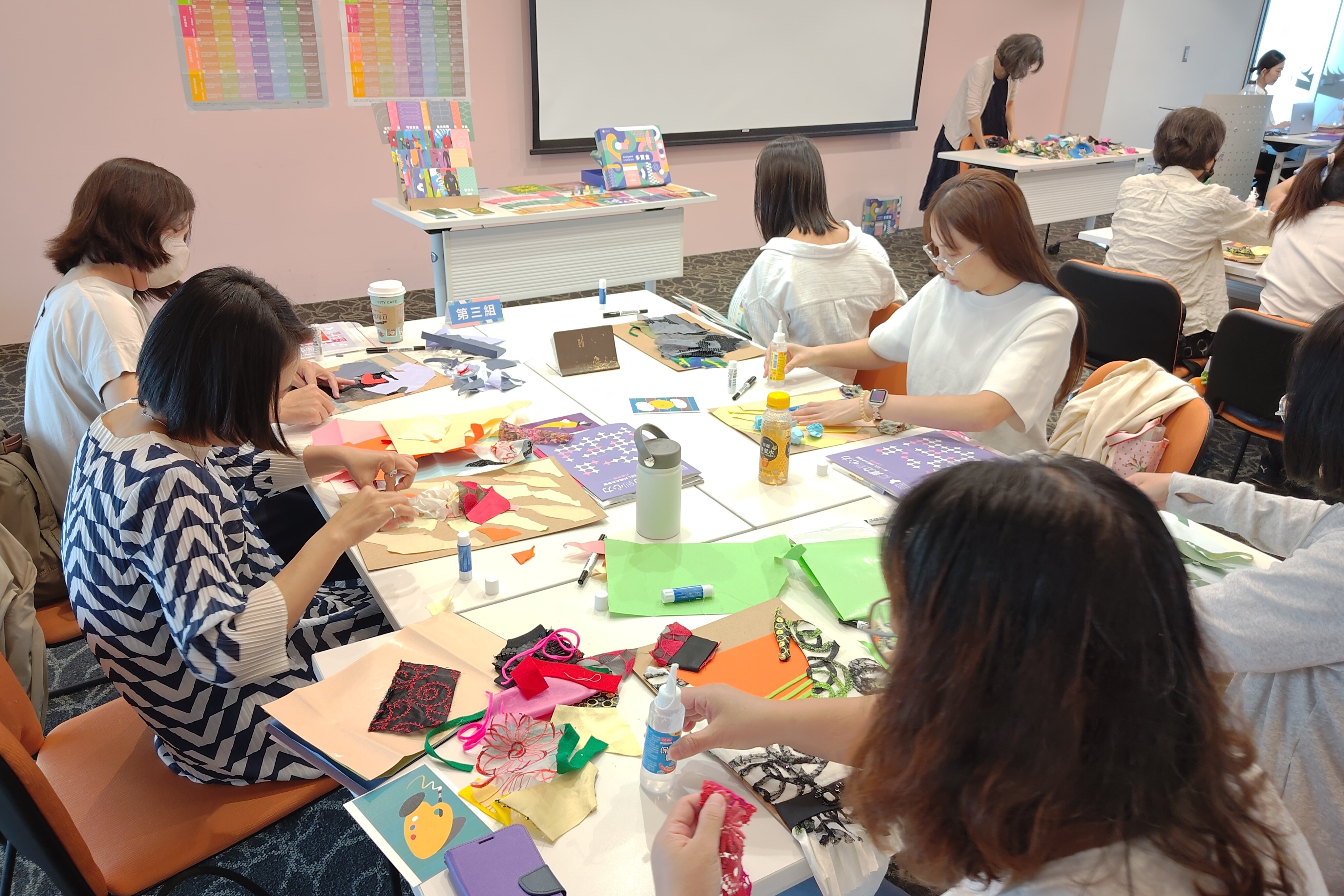
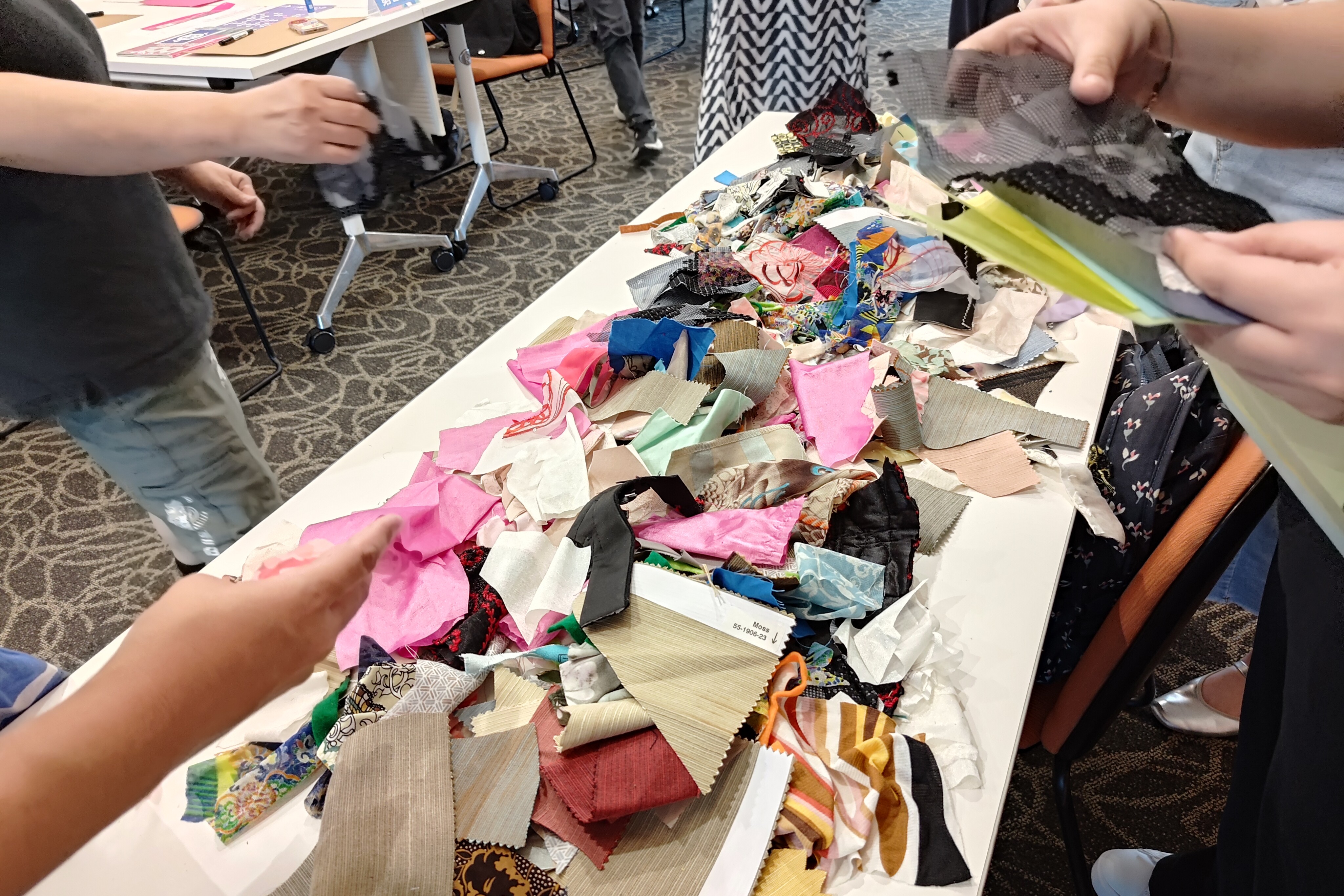
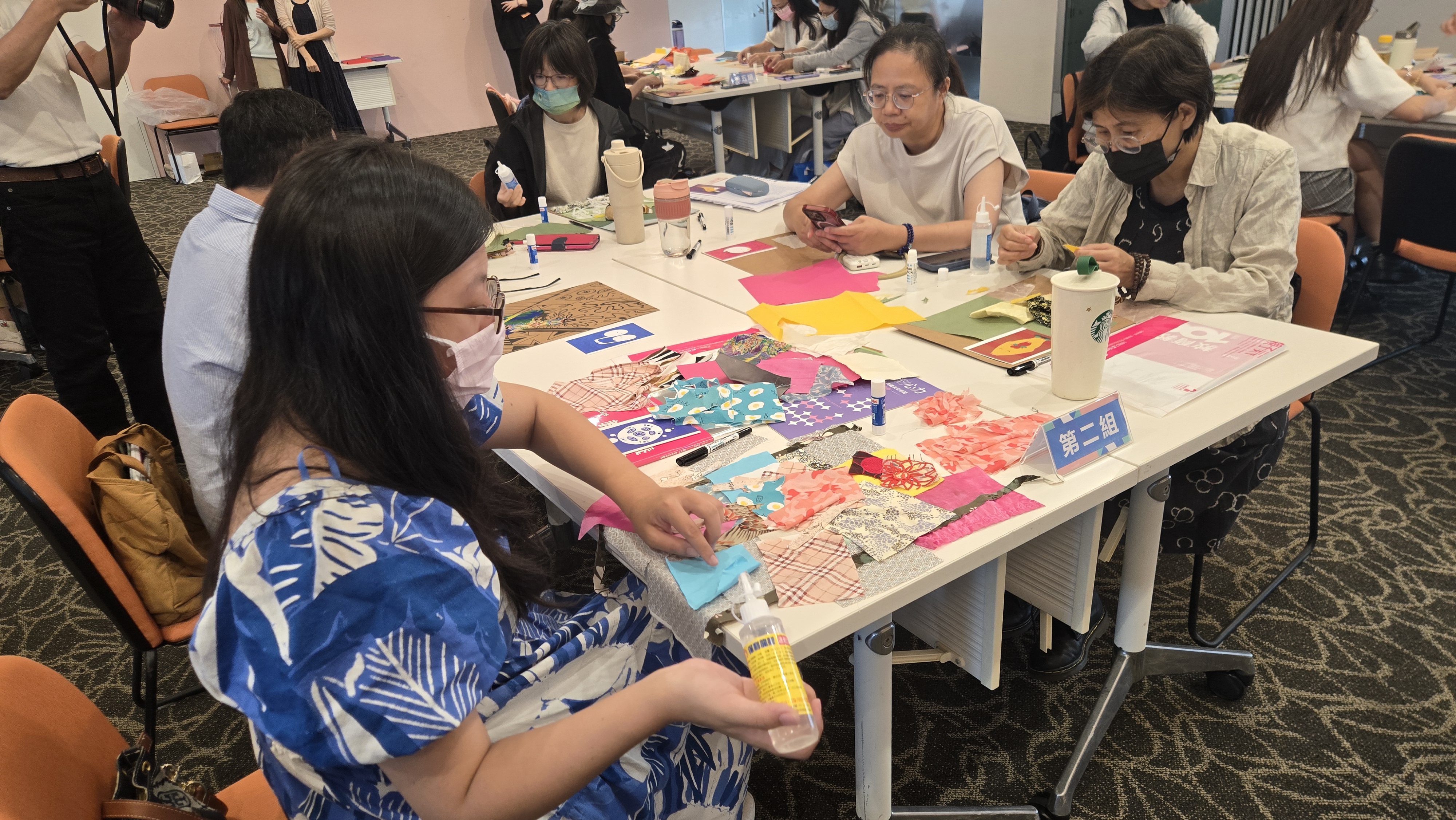
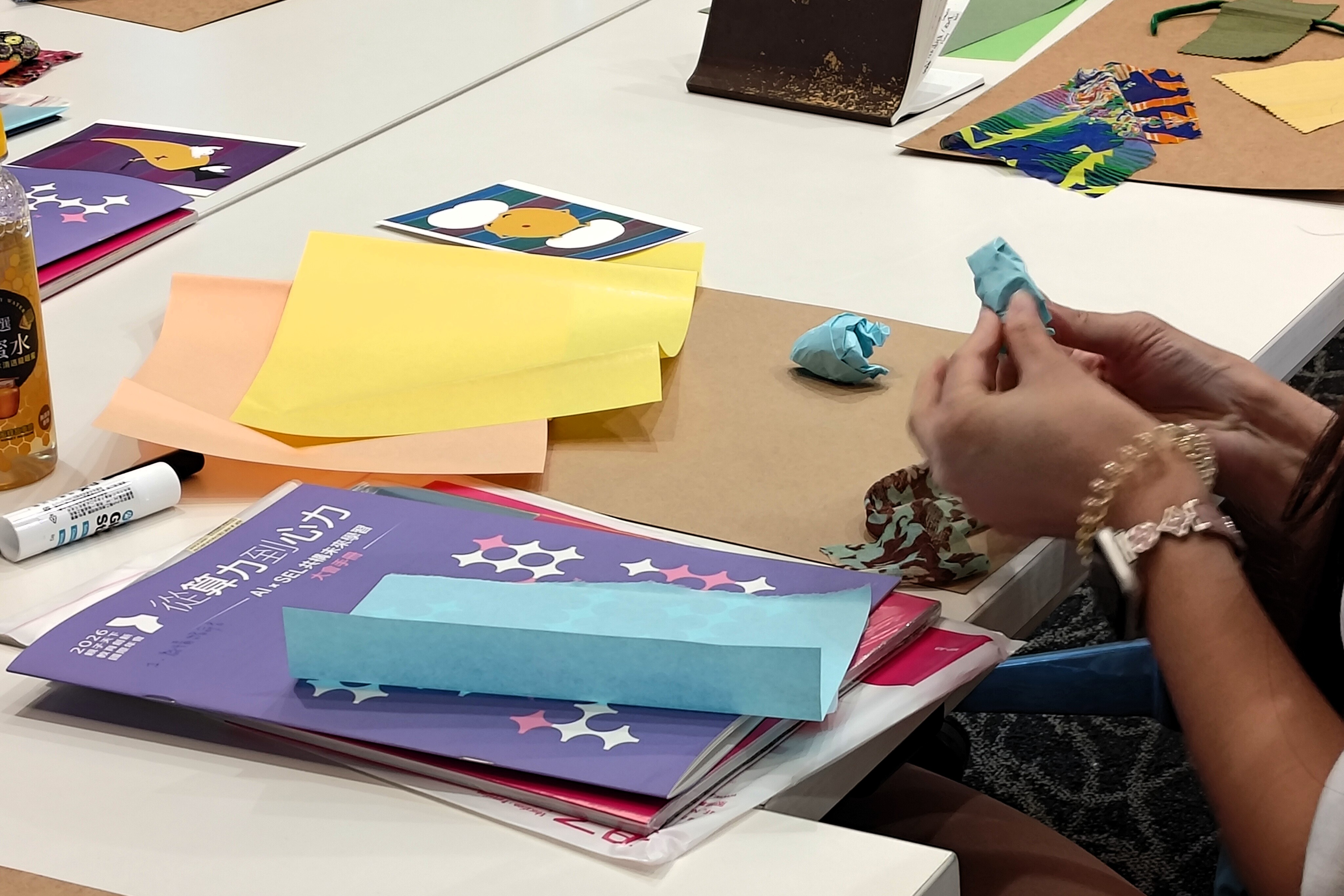
During the creative phase, the workshop included a "no scissors" challenge. From a SEL perspective, interacting with the media (scrap fabric, colored cotton paper) is essentially a "low-stakes practice" before establishing genuine relationships with others. Participants learn to build relationships with the external world by "exploring, kneading, and tearing" the media. Compared to the complexity of interpersonal interactions, the media provides space for repeated attempts and allows for failure. Furthermore, the provision of materials like polystyrene glue and lipstick glue, instead of the extremely fast-drying "finishing glue," is precisely to utilize their fluidity before drying, giving creators room for adjustment and rearrangement. This "forgiving" characteristic helps reduce creator anxiety. Many participants initially exclaimed, "I can't do without scissors," but through the tactile experience of touching and tearing, they gradually transformed from "feeling it won't work" to "discovering possibilities." This cultivation of resilience is the core of SEL.
In the latter half of the course, the instructor guided each group to connect the characters created by the members into life stories and present them, demonstrating the process of empathy and relationship repair. Through the translation of aesthetic education, a safe space that allows for exploration and failure was established, allowing participants to exchange a part of each other's lives by sharing their work, and to rediscover themselves, others, and this ever-changing world.
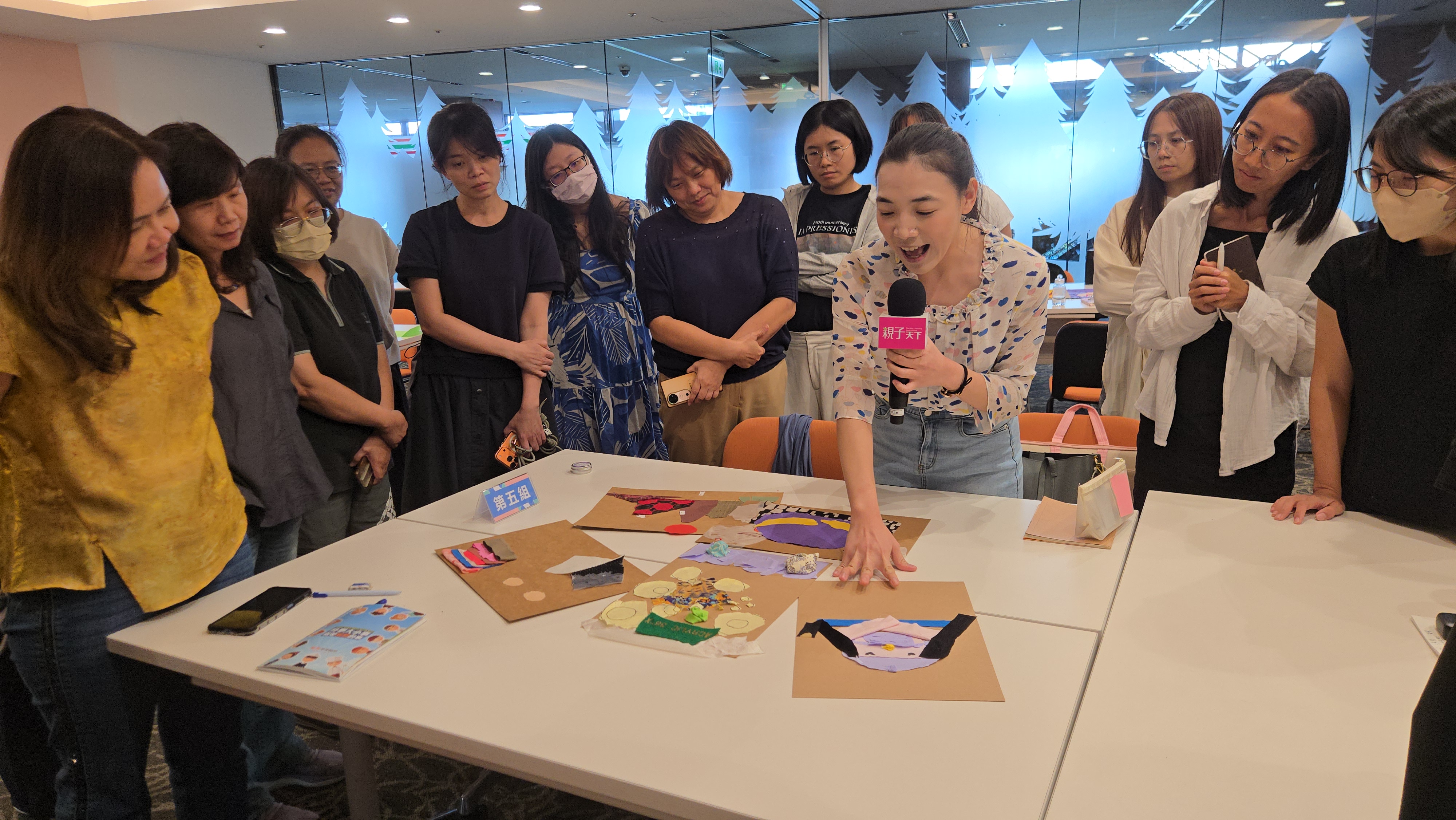
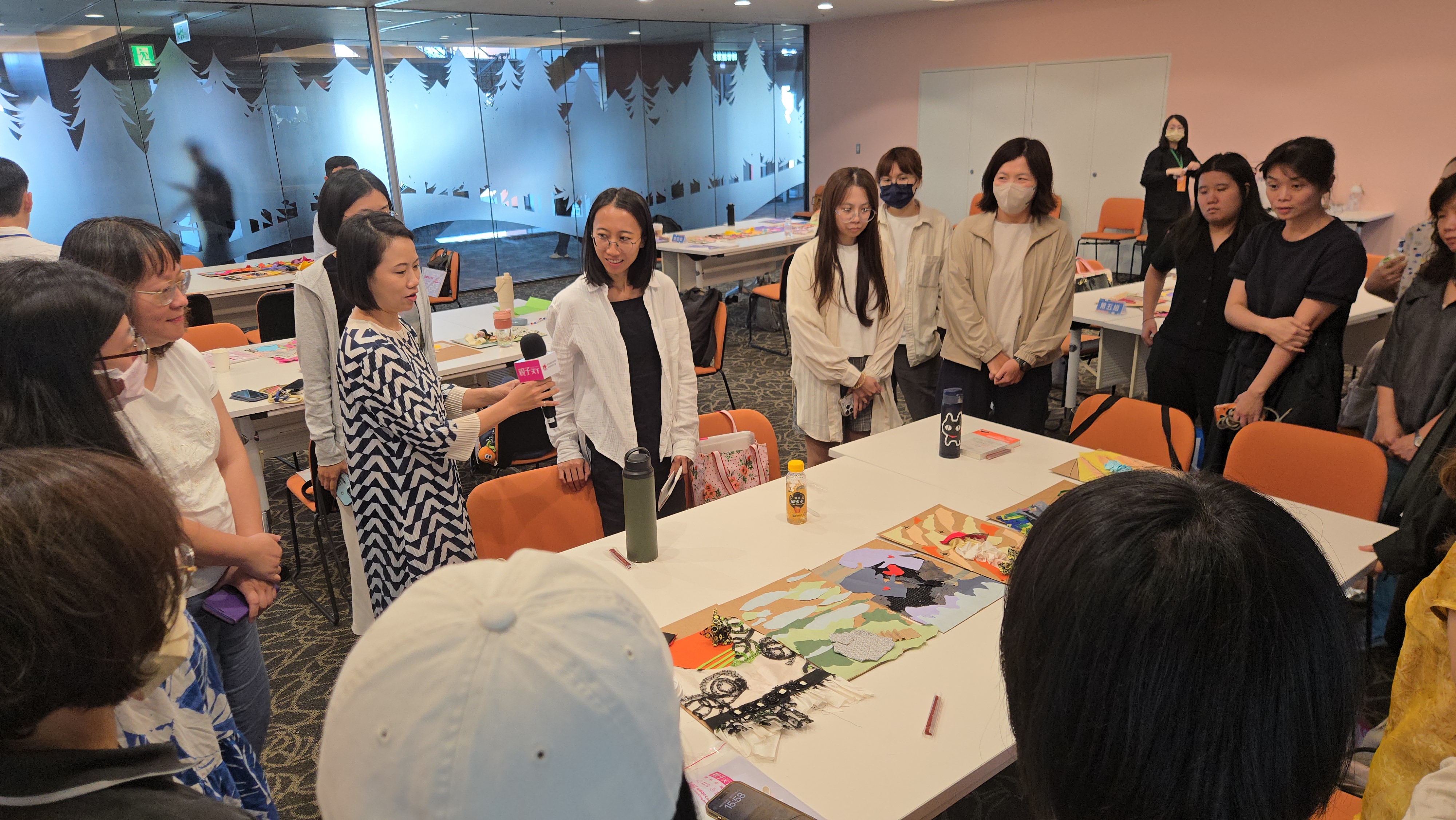
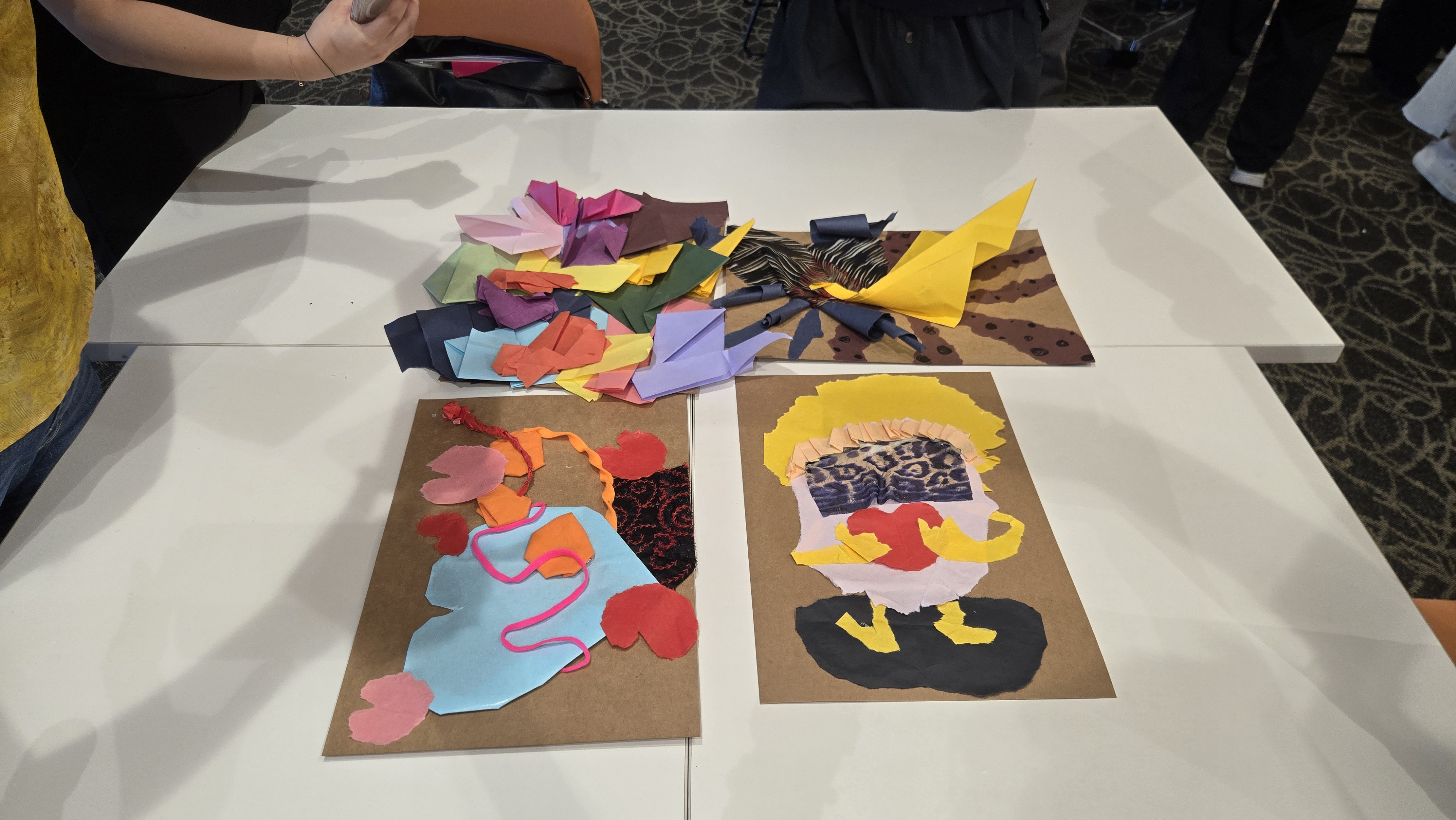
Finally, the instructor guided the participants to piece together a collective story from individual roles, pushing personal awareness towards SEL (Social, Emotional, and Social) integration issues such as social participation. For example, one group connected a free-spirited artist with an elf, highlighting the value of embracing each person's different developmental stages; another group created a story of two characters meeting, featuring a "catcher" with large hands and wings, symbolizing the embodiment of security. Finally, one group used a real-life case to describe a teacher who felt remorseful after strictly disciplining students. By giving a bottle of soothing running water as a gift, they resolved the initial awkwardness between them.
During these story-sharing sessions, each group took turns introducing the characters and storylines they created, sharing the challenges they encountered along the way, and attempting to embrace diversity and differences. They also explored different perspectives on the leadership, execution, and support roles each individual plays within the same group. Under the guidance of teacher Tsai Wen-fang, they established an interactive process that was tolerant of emotional fluctuations and focused on authenticity rather than perfection.
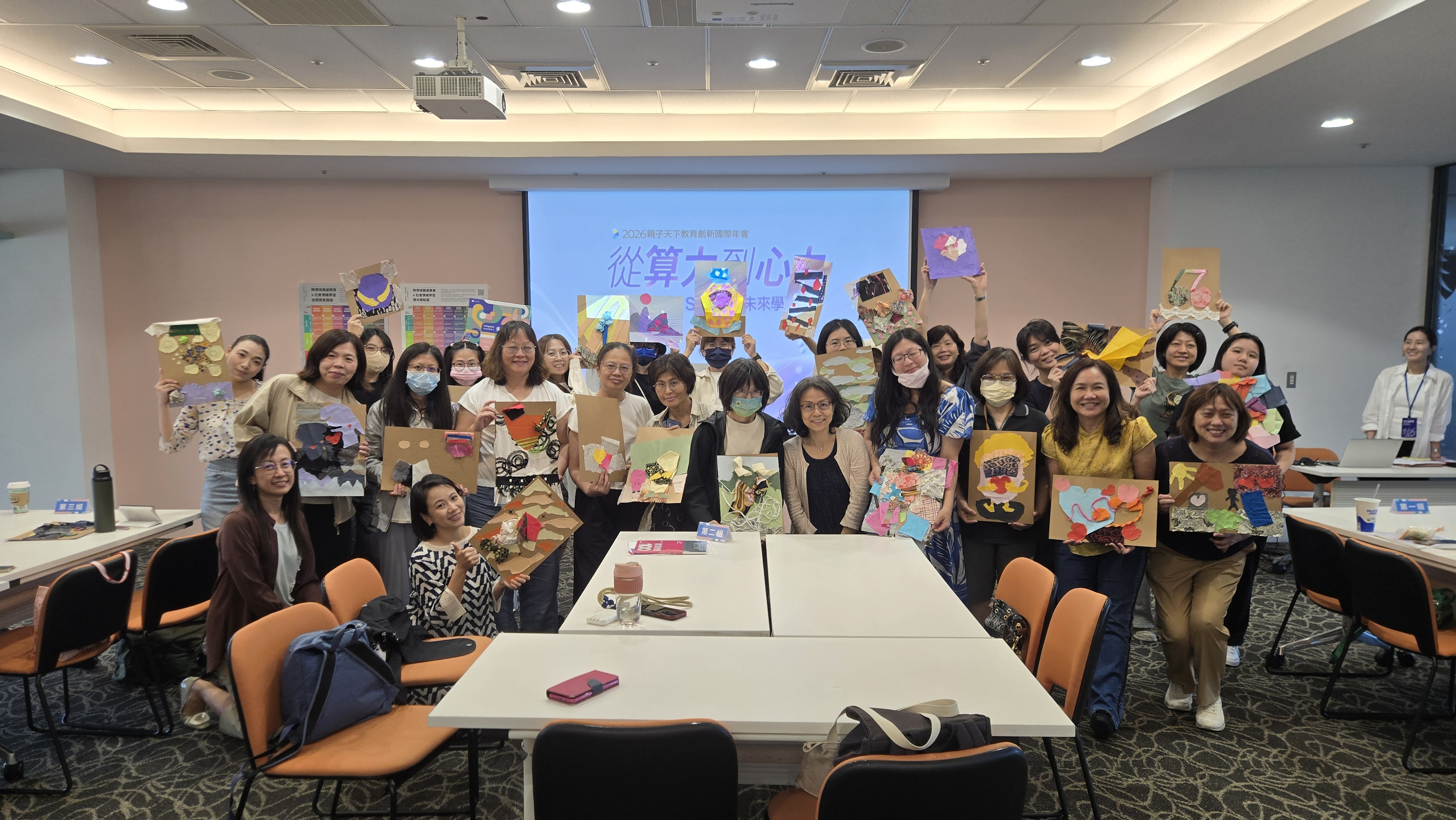
SEL (Self-Learning Experience) should not just be a term in textbooks, but a cyclical practice for teachers and students in every day and every conflict. Teacher Tsai Wen-fang used art intervention to integrate the participants' mind and body. This workshop was not merely about learning skills, but a co-creation of senses and spirit. As the warm summary at the end of the event stated: by sharing our works, we were essentially "exchanging a part of each other's lives." In this continuous interaction and co-creation, we constantly expanded our life experiences, and with curiosity and open minds, rediscovered ourselves, others, and this ever-changing world.