2026 Ministry of Education's Overseas Study Program for Aesthetic Education Teachers—Exploring the Reggio Emilia Approach and Discovering the Hundred Languages of Children
2026/11/04
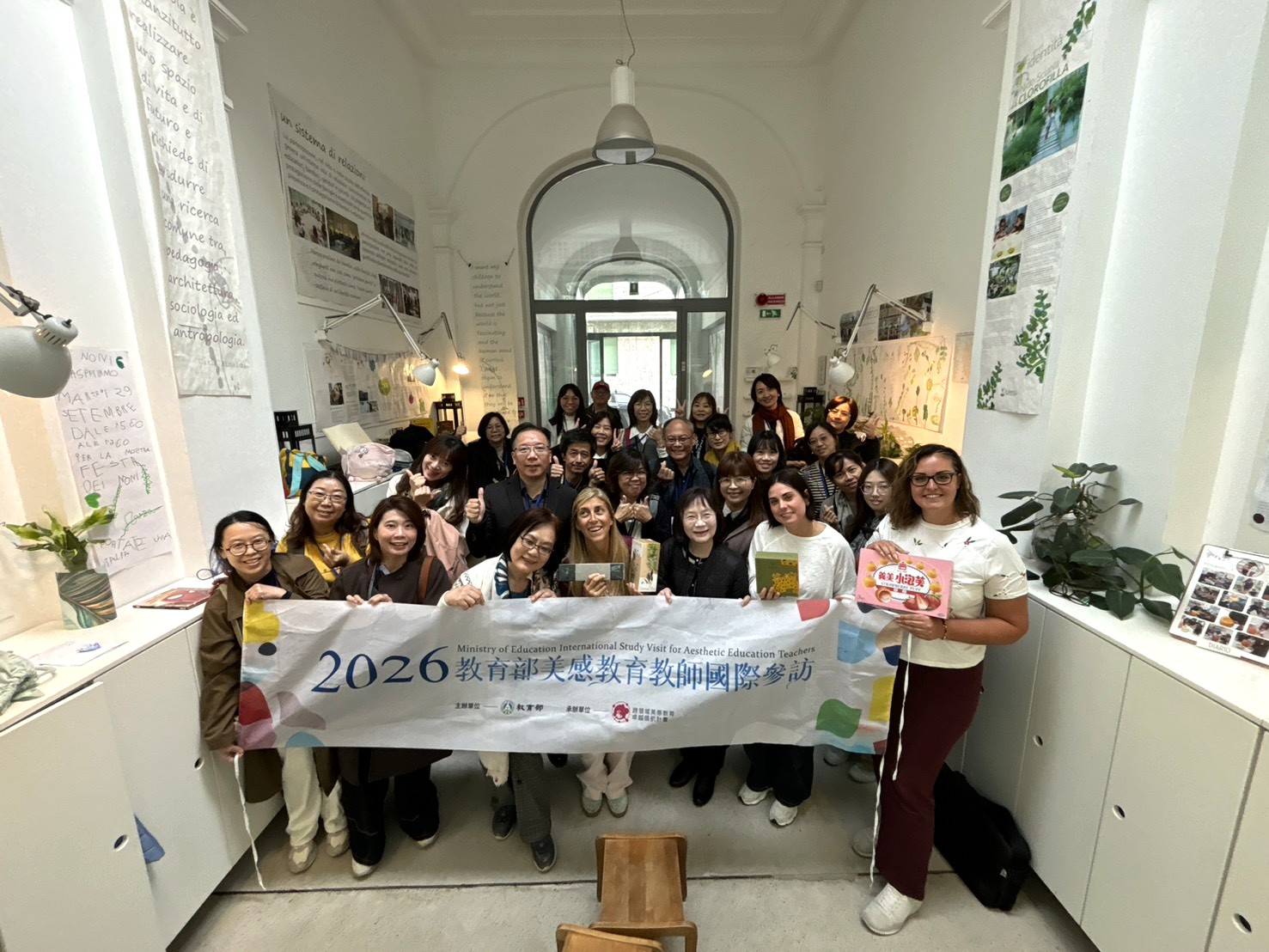
On October 30th, a sunny yet slightly chilly day, the first group of visiting teachers from the Italian Vatican arrived safely in Milan and then visited the Nido Scuola Clorofilla Reggio Emilia kindergarten!
Through founder Giovanna Gulli's philosophy sharing, guided tours of the campus space, and exchanges with teachers on site, participants gained a deeper understanding of how the Reggio Emilia Approach views children as active learners and shapes an educational environment full of possibilities for exploration through the environment, relationships, nature, and diverse media.
The Reggio Emilia approach to early childhood education originated in Reggio Emilia, northern Italy. Developed by psychologist Loris Malaguzzi and others, it is one of the most influential early childhood education philosophies of our time. Its core principle revolves around "the hundred languages of children," emphasizing that every child possesses diverse ways of expression and the ability to understand the world. Learning occurs not only through language and writing but also through various forms such as physical activity, images, sounds, play, construction, observation, and artistic creation.
Teachers act as listeners, observers, and companions, supporting children to discover problems and raise ideas from real-life experiences through continuous dialogue, recording, and response, and to co-construct knowledge with others.
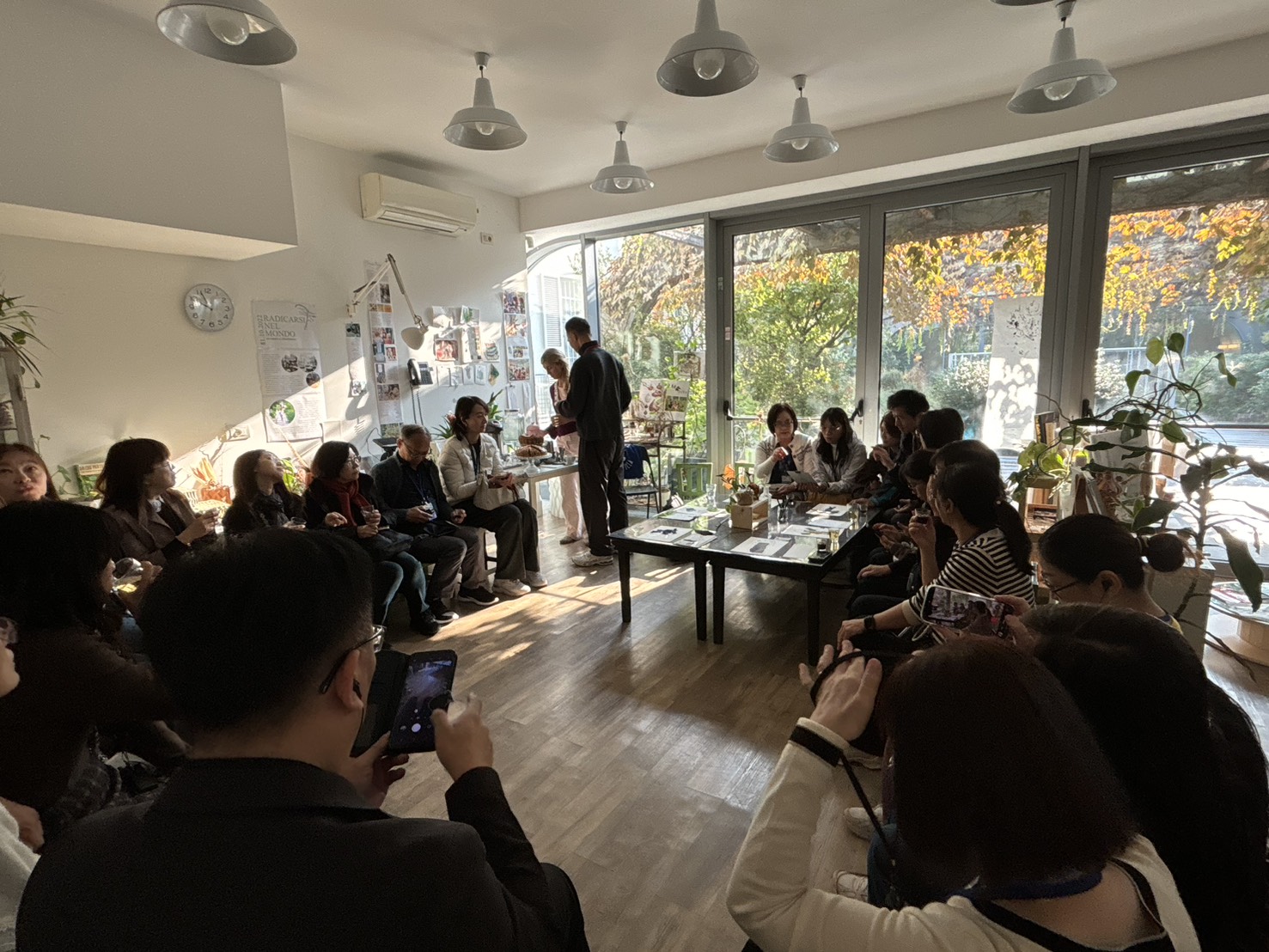
Today we visited Nido Scuola Clorofilla, the first school in Milan to implement the Reggio Emilia approach to education. It enrolls children aged six months to six years, including a childcare center (Nido) and a kindergarten, currently housing approximately 160 students. The school building was originally a hospital, later converted into a theater, and has since been redesigned into a learning environment aligned with the educational philosophy. From the architectural space to the interior design, the school's meticulous consideration of the relationship between the environment and children's learning is evident.
Principal Giovanna Gulli explained that the school extensively utilizes transparent glass and permeable partitions to introduce natural light, allowing it to flow freely throughout the interior spaces. The seven classrooms are not completely separated by enclosed walls, but rather maintain appropriate visual connections, allowing children to see what is happening in different spaces: some are eating, some are playing, and others are focused on crafts and creations. Seeing things from different angles allows for different interpretations and understandings of the same object. Furthermore, the reflections in mirrors allow children to observe even more different perspectives of the space. This design transforms the classrooms from isolated teaching units into interconnected living communities.
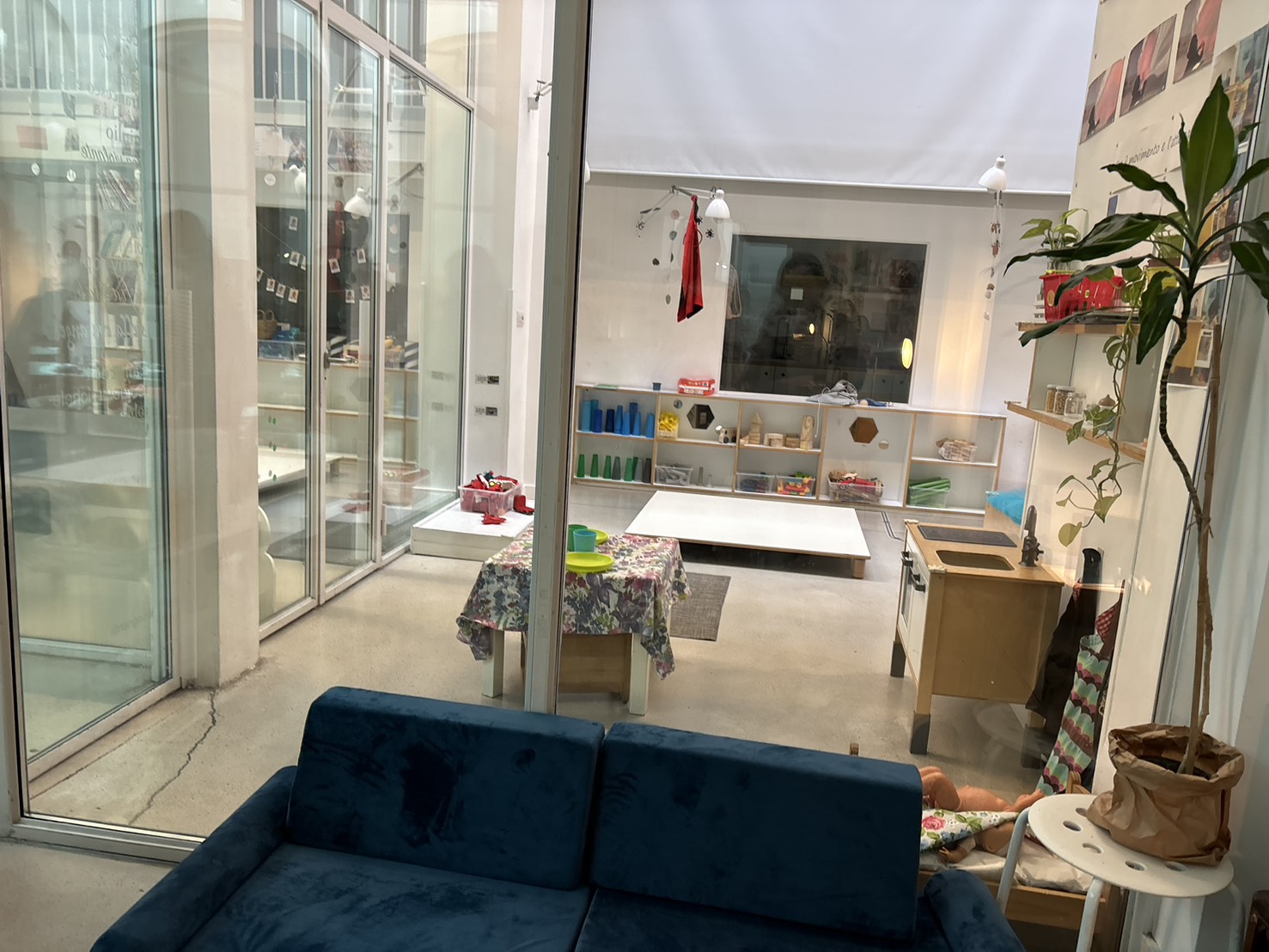
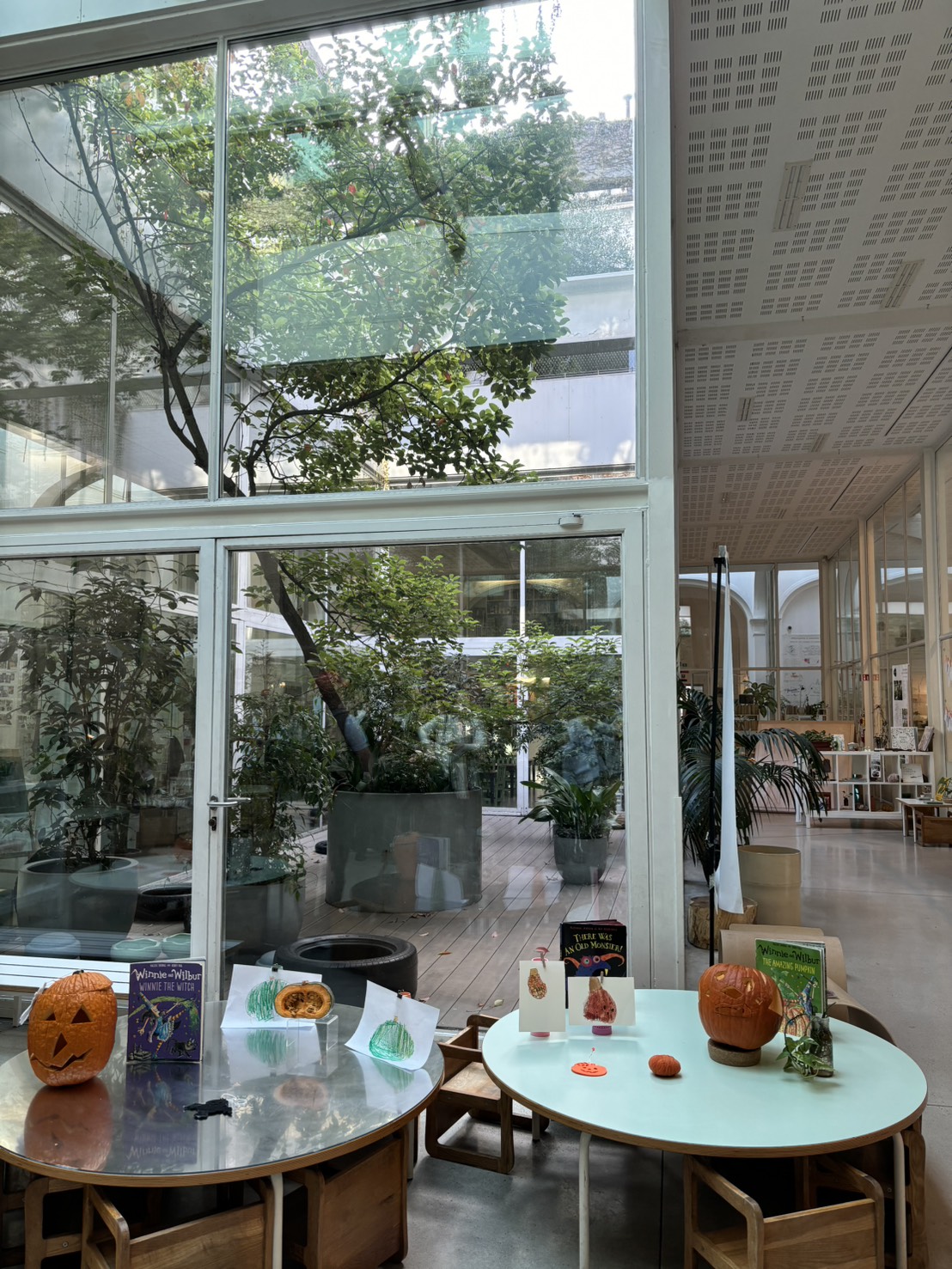
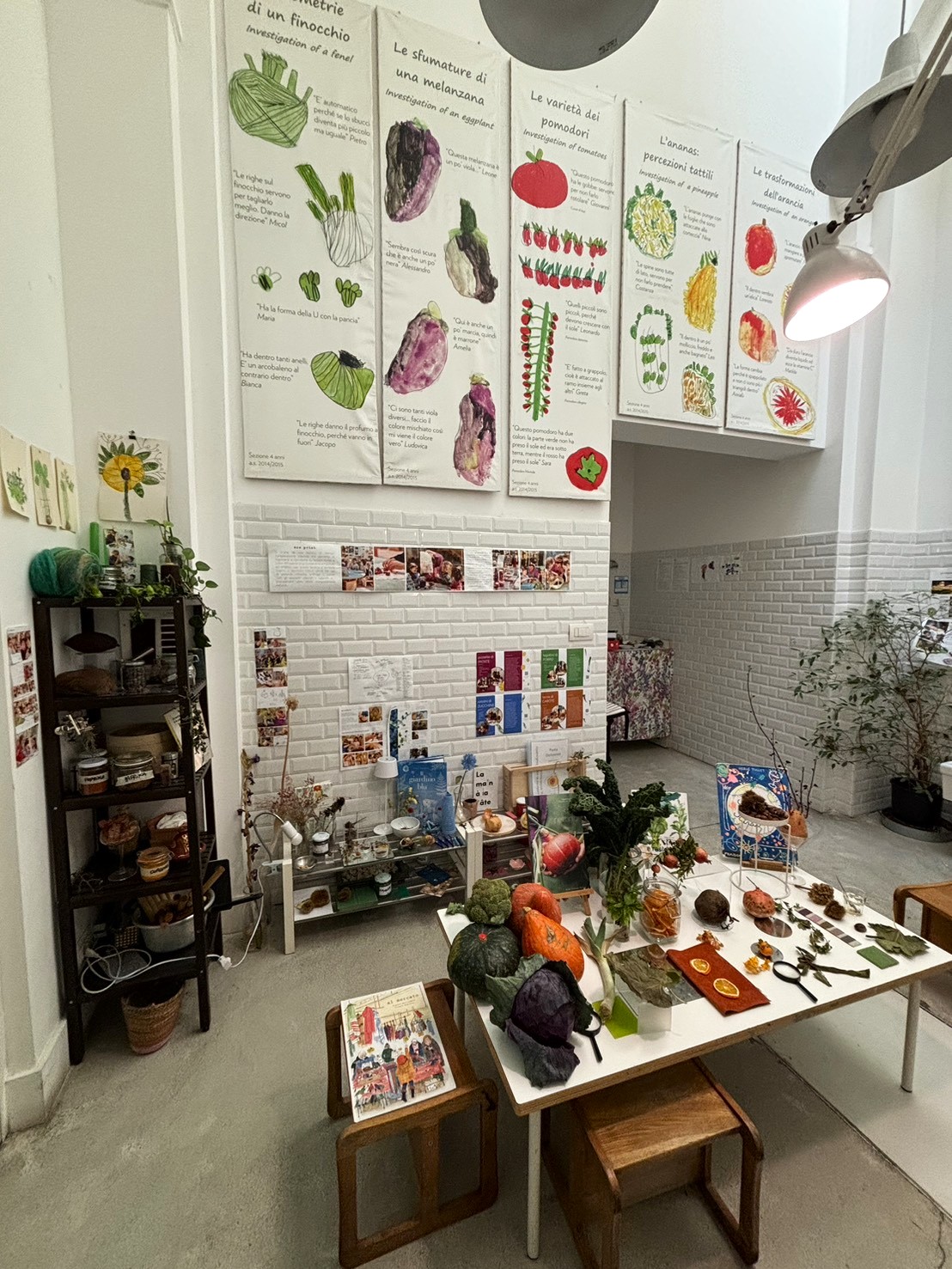
Through the openness and transparency of the space, children can observe the activities of different ages and groups, gradually understand their relationships with others, and build a sense of security and belonging in a familiar living environment. The use of mirrored elements in the school further extends the visual experience of the space, allowing children to rediscover their surroundings from different perspectives. These spatial arrangements do not simply pursue architectural aesthetics, but rather regard the environment as an important educational medium. The space itself can spark curiosity, promote interaction, and support children in building their understanding of the world within constantly changing daily situations.
In addition, the second-floor garden outdoor space is an important connection between children and the natural environment, and an indispensable learning space in the school. The kindergarten is named after chlorophyll, and through contact with plants, sunlight and seasonal changes, children can feel the rhythm of the natural environment and understand the growth and change of life through life experiences.
In curriculum practice, the kindergarten places particular emphasis on the level of detail in observation and how children express their discoveries through different media. For example, when faced with cacti of various shapes and sizes, teachers do not rush to provide standard answers, but instead guide children to use observation tools such as magnifying glasses to carefully observe the shape, texture, and details of the plants, and then record what they see through drawing and other methods. From the differences in the appearance of different plants to the appearance of the same plant from different observation angles, children gradually understand that things have multiple facets and learn to interpret the world they observe in their own way.
It is worth mentioning that the school also extends the children's observations to interdisciplinary creative practices. Teachers and designers collaborate to transform the children's observations and depictions of plant roots into 3D printed ceramic jar designs, turning the observations and imaginations that originally remained on paper into tangible and visible works through digital tools and design technology.
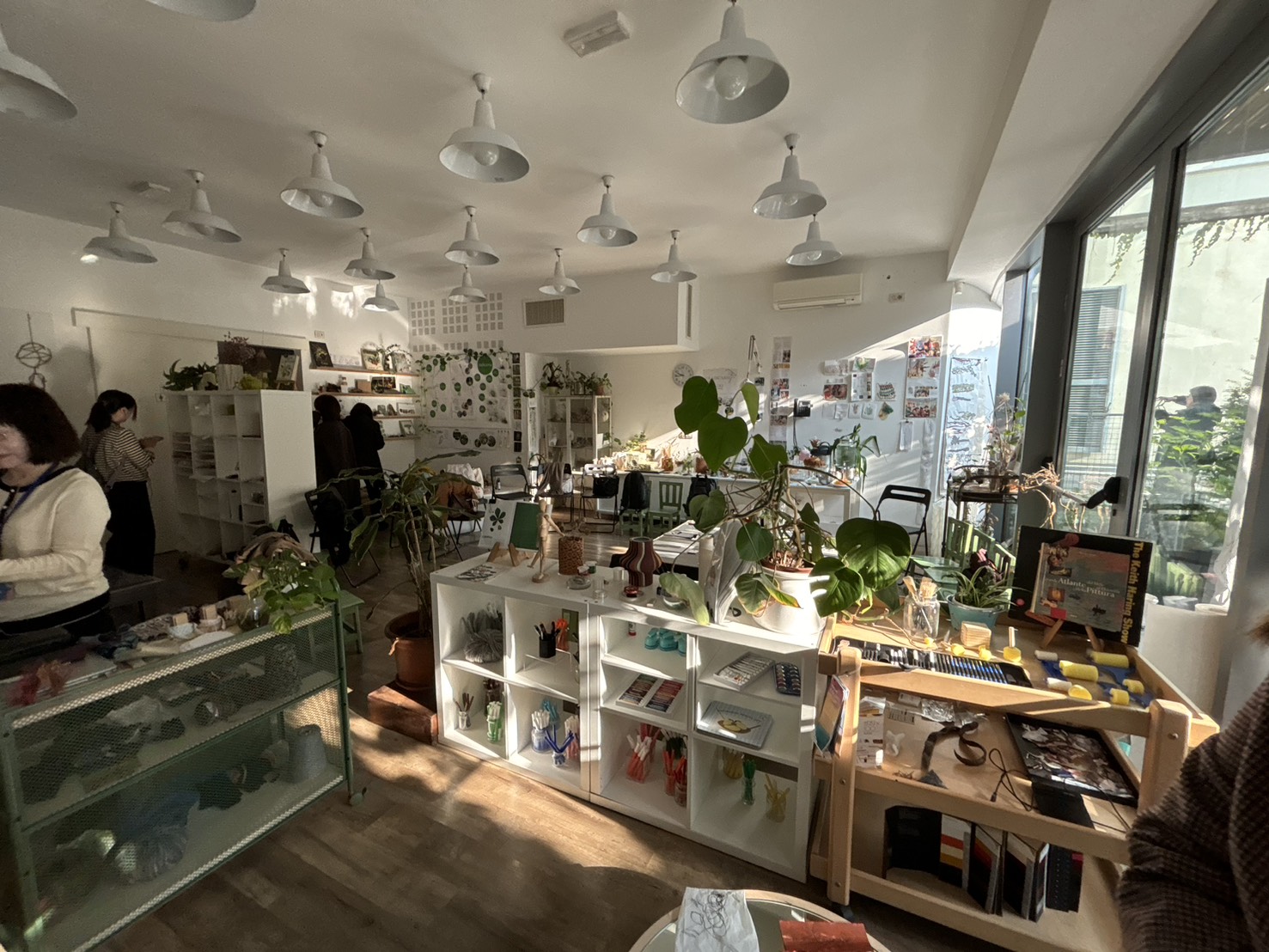
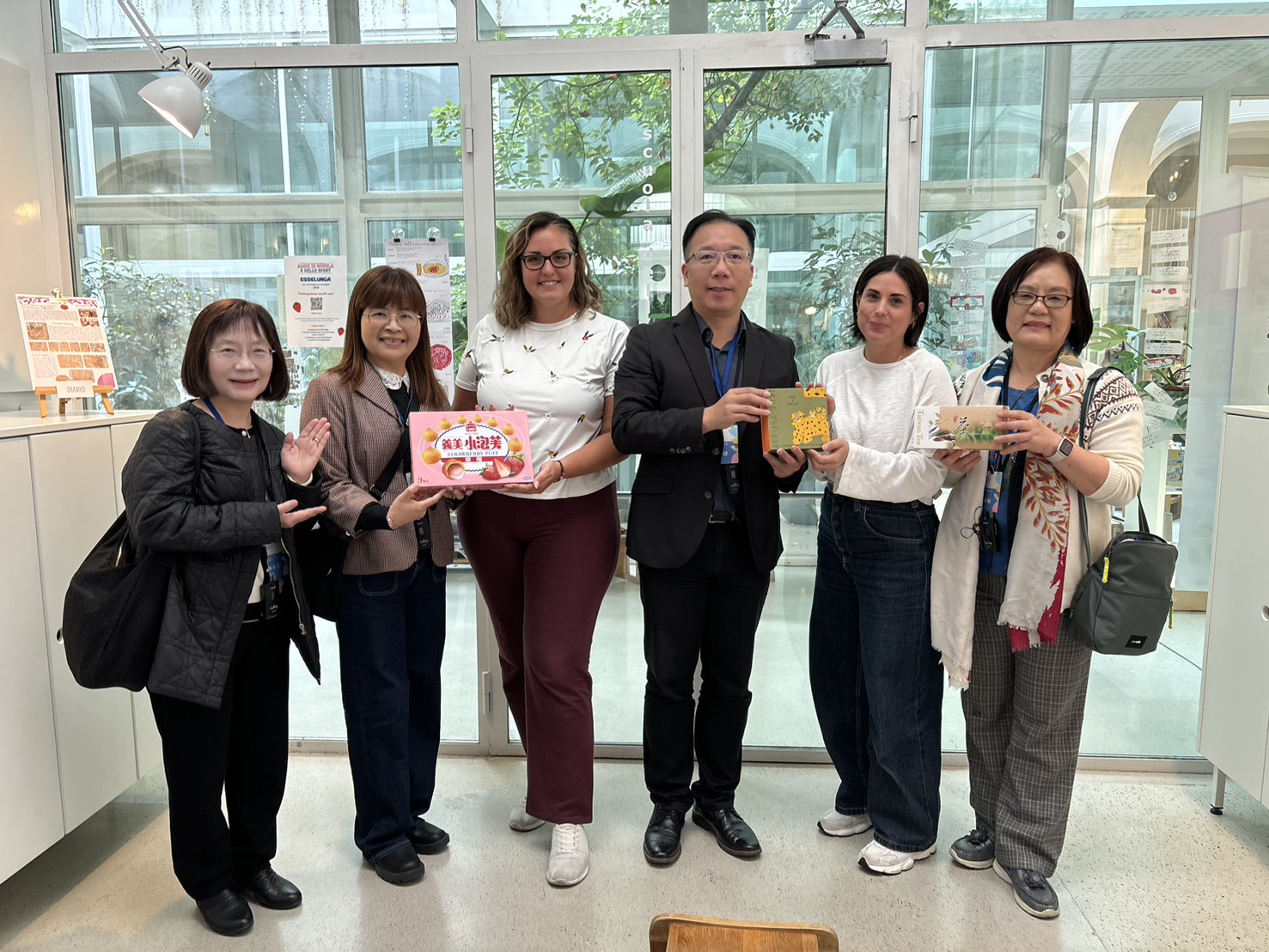
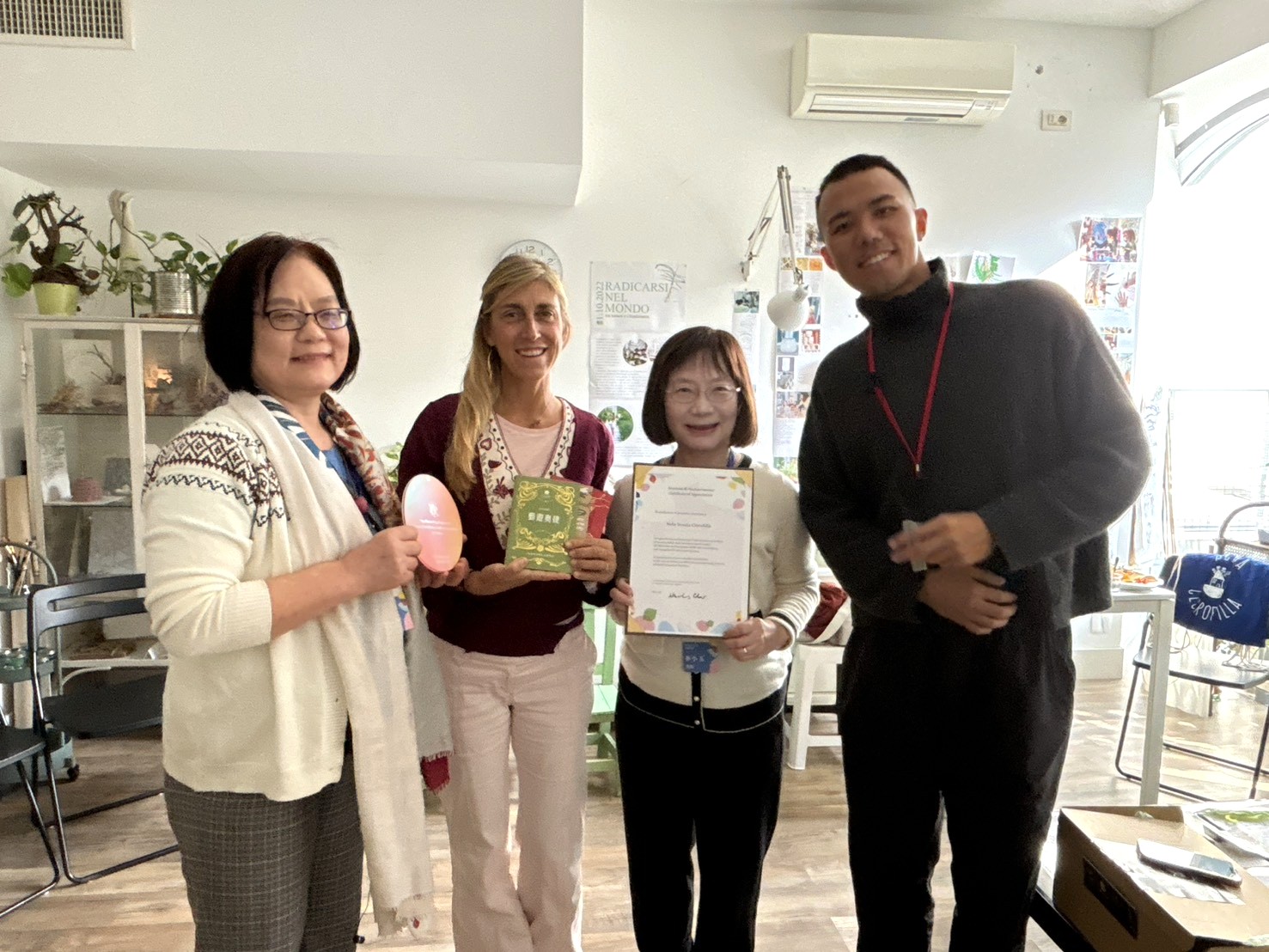
During the visit, the teachers also exchanged questions with each other, asking about the school's faculty composition, student schedule planning, communication with parents, teaching records, and whether there were any teaching activities that incorporated local Italian festivals and culture.
Giovanna Gulli shared that the school has about 40 staff members, including not only classroom teachers but also art teachers, dance teachers, swimming teachers, native English speakers, administrative secretaries, and chefs, among other professionals. This diverse professional composition allows children to encounter knowledge and experience from different fields in their daily lives. Notably, the native English speakers don't just conduct English classes at fixed times; they integrate English into the school's daily life, making language a natural part of communication.
Food and agriculture education is also a curriculum aspect that the school places great emphasis on. The school integrates the kitchen and dining areas into the overall activity space, using a transparent and safe design to allow children to see the food preparation process and understand the relationship between food and life. Children also have the opportunity to grow vegetables and fruits by hand in a small garden, observing the growth process of plants from sowing and caring for them to harvesting, further understanding the budding, fruiting, and withering of life. For the school, food, eating, and cooking are not only necessary activities in life, but also an important language of learning, carrying sensory experiences, natural knowledge, and interpersonal interactions.
Furthermore, the swimming lessons arranged by the school also differ from typical skills-oriented courses. The primary goal of the course is not to teach children to swim, but rather to allow them to experience buoyancy, temperature, and environmental changes through physical contact with water, exploring the relationship between their bodies and the world, without parental supervision. This arrangement makes physical experience itself a part of learning and expands the ways children understand themselves and their environment.
In terms of cultural education, the school also integrates local Italian festivals into the curriculum, such as the seed exchange activity for Farmers' Day. Through reading, discussion, and hands-on activities, children are guided to understand the cultural connotations behind the festivals, and parents are invited to participate. Culture is not just knowledge in textbooks, but rather something that children can personally experience and understand through life experiences and family interactions.
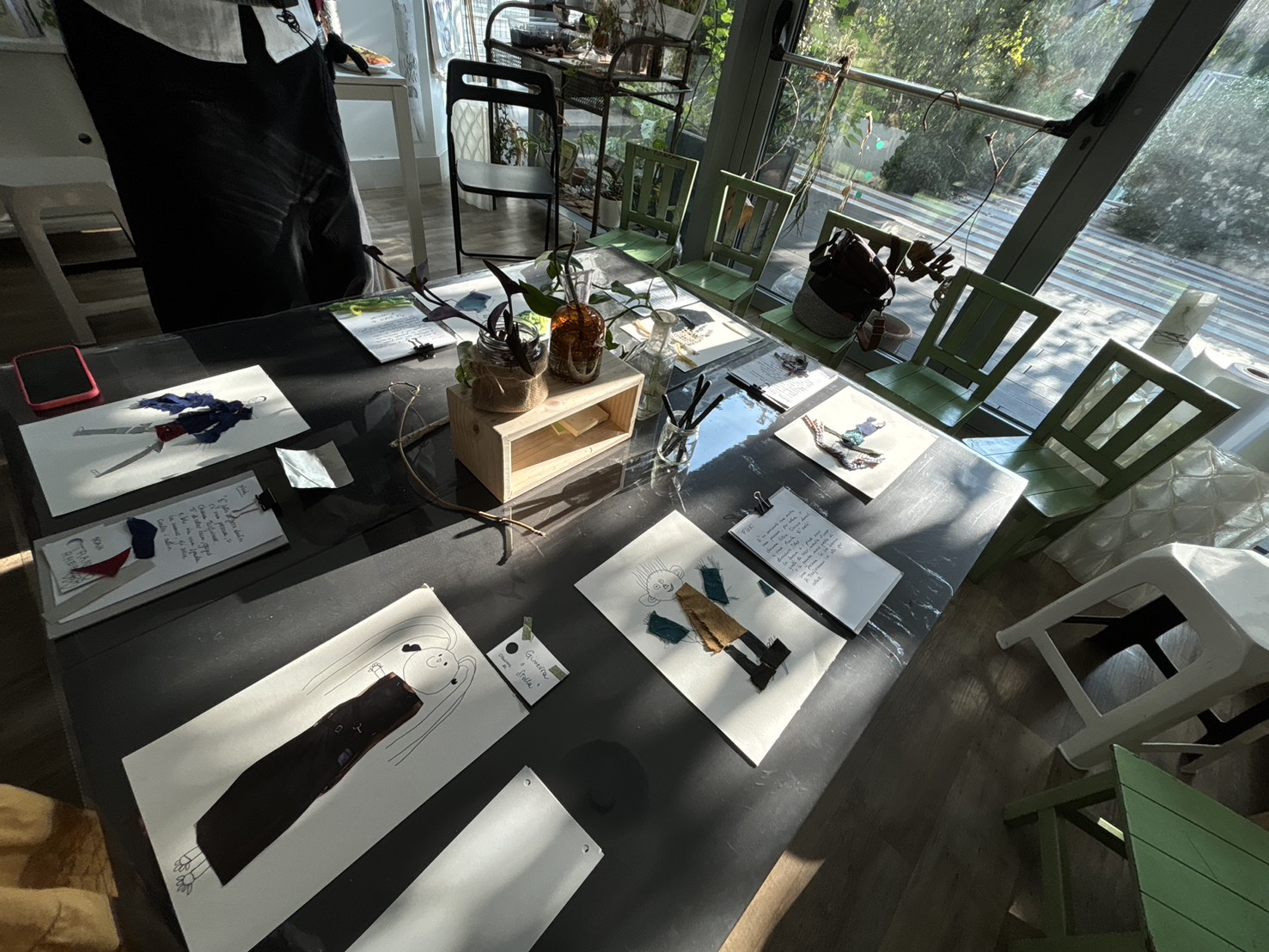
Professor Chunmin and Giovanna discussed the connection between this teaching method and SEL. From the exchange, it can be seen that the school does not regard SEL as a teaching unit separate from the curriculum, but rather integrates it naturally into daily life and teacher-student interactions.
For example, teachers might invite children to help set the table, cultivating their awareness of participating in group life, sense of responsibility, and ability to cooperate with others through seemingly simple daily tasks. When conflicts arise between children, teachers don't rush to order them to stop, but instead guide them to sit down, understand each other's thoughts and the reasons for their behavior, recognize emotions through dialogue, learn to express themselves, and try to understand others' perspectives.
These seemingly minor daily interactions contain important abilities such as self-awareness, emotional regulation, social awareness, interpersonal relationships, and responsible decision-making. Children practice interacting with others in real-life situations, gradually understanding how their actions affect the group, and thus building respect, understanding, and the ability to live together. While the school establishes basic life rules and safety principles, it does not rely on a uniform pace or predetermined outcomes, but rather respects children's developmental differences and exploratory processes. Teachers observe and record to understand each child's learning status, then provide support and guidance as needed. This educational approach maintains flexibility in learning and allows children to develop their interests and abilities at their own pace in an environment relatively free from pressure to achieve results.
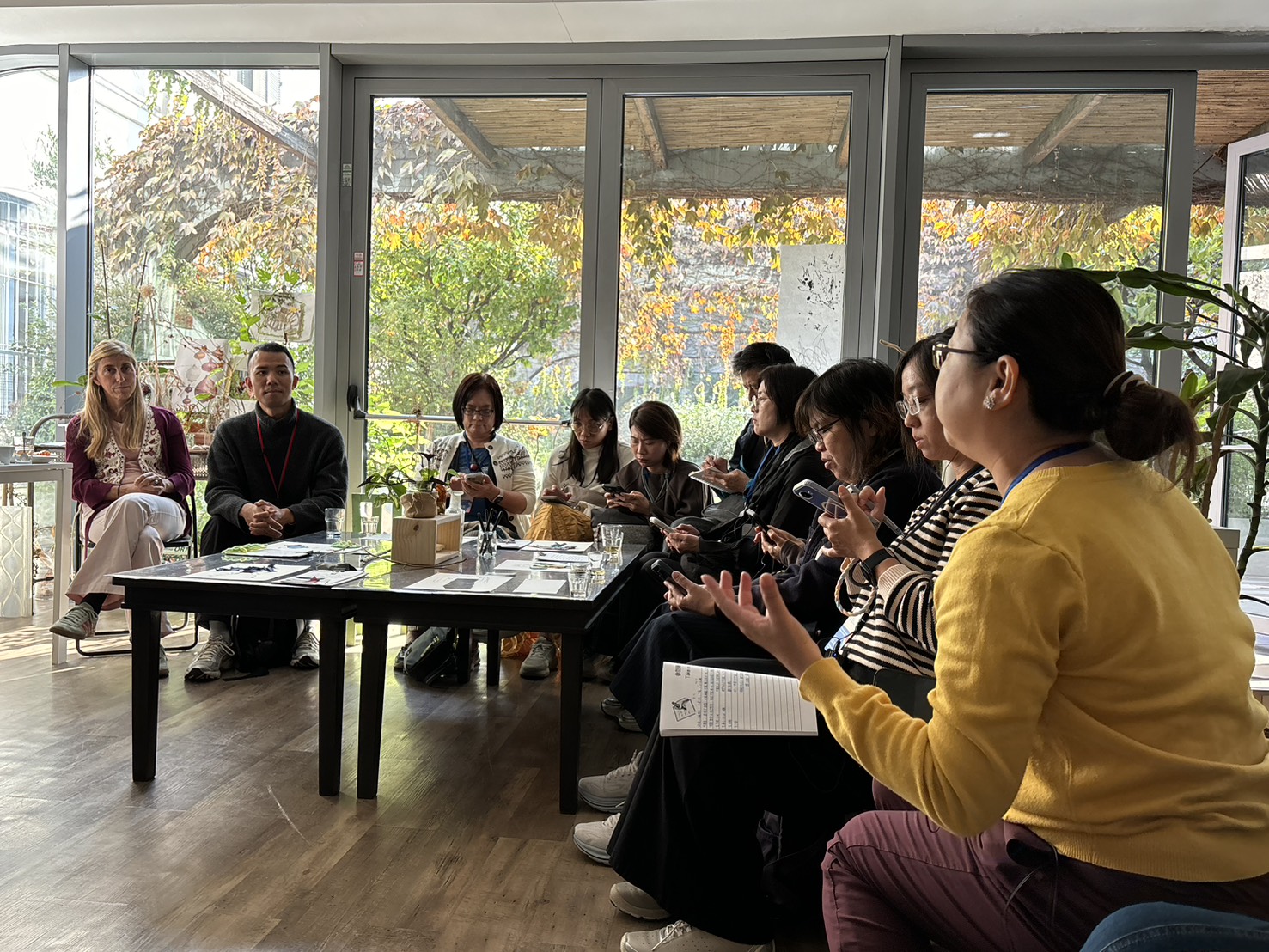
In addition to the curriculum and teaching philosophy, the visiting delegation also exchanged views on the school's teaching records, parent-teacher communication, and parent participation mechanisms. The school stated that it regularly communicates with parents face-to-face during drop-off and pick-up, and uses an app to record children's daily lives at school, allowing parents to keep track of their children's learning and living conditions. The school also arranges three parent-teacher meetings and two individual parent interviews each year, and invites parents to the school through festivals and events to participate in their children's learning journey.
These sharing sessions reveal that Reggio Emilia education values not only children's classroom performance but also views families, schools, and communities as interconnected educational networks. Through continuous communication and shared participation, teachers, children, and parents form vital relationships that support children's growth.
This visit allowed teachers to rethink the power of the educational environment from different perspectives, including school space, curriculum design, life practice, and interpersonal interaction. Nido Scuola Clorofilla integrates transparency, openness, and nature into its spatial planning, allowing children to build an understanding of the environment through observation and interaction; through diverse media and interdisciplinary collaboration, it supports children in transforming their feelings and imaginations into concrete creations; and further, it cultivates relationship building and socio-emotional competence through eating, playing, physical experiences, and daily conversations.
This exchange also offers thought-provoking insights for interdisciplinary aesthetic education: aesthetic education need not be limited to art courses or artwork results, but can unfold naturally from the arrangement of space, the selection of materials, sensory experiences, and the interaction between people and the environment. When education is willing to listen to children's ideas, respect different ways of expression, and closely connect learning with real life, the environment is not just a place where learning takes place, but also an important force guiding exploration, stimulating creativity, and building relationships.
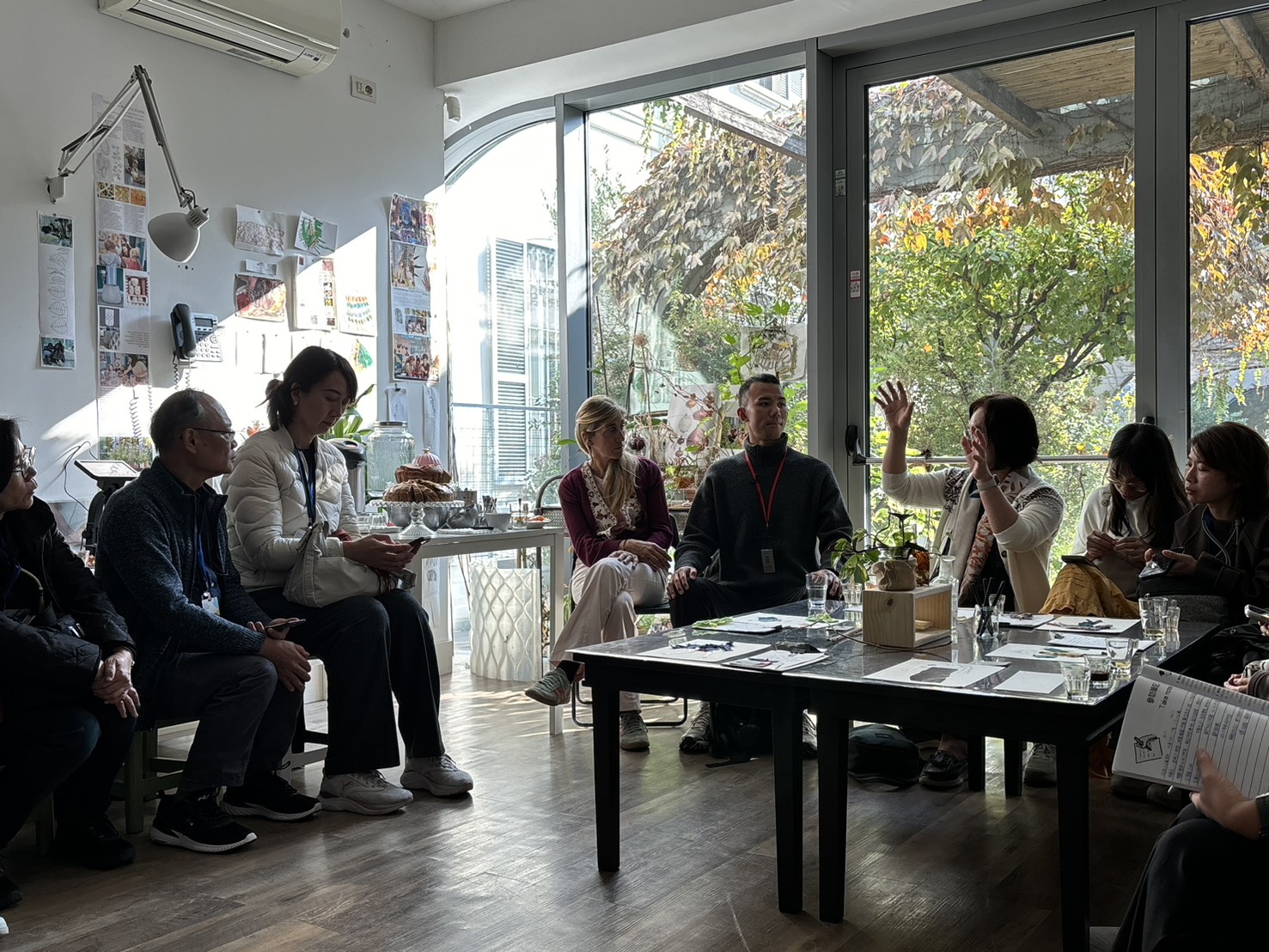
Stepping into the Reggio Emilia approach, the visiting delegation witnessed not just another model of early childhood education, but also a child-centered, relationship-based, and environment-mediated approach to education. This respect for the diverse possibilities of children provided profound inspiration for the international visit, allowing teachers to rethink the practical applications of aesthetic education in different educational stages and teaching contexts with fresh perspectives.