Interdisciplinary Aesthetic Education × Teacher Training Committee Special Issue 18|SDGs Concepts and Teaching Strategies
2026/04/23
Let aesthetic education enter into life and into the learning of different subjects.
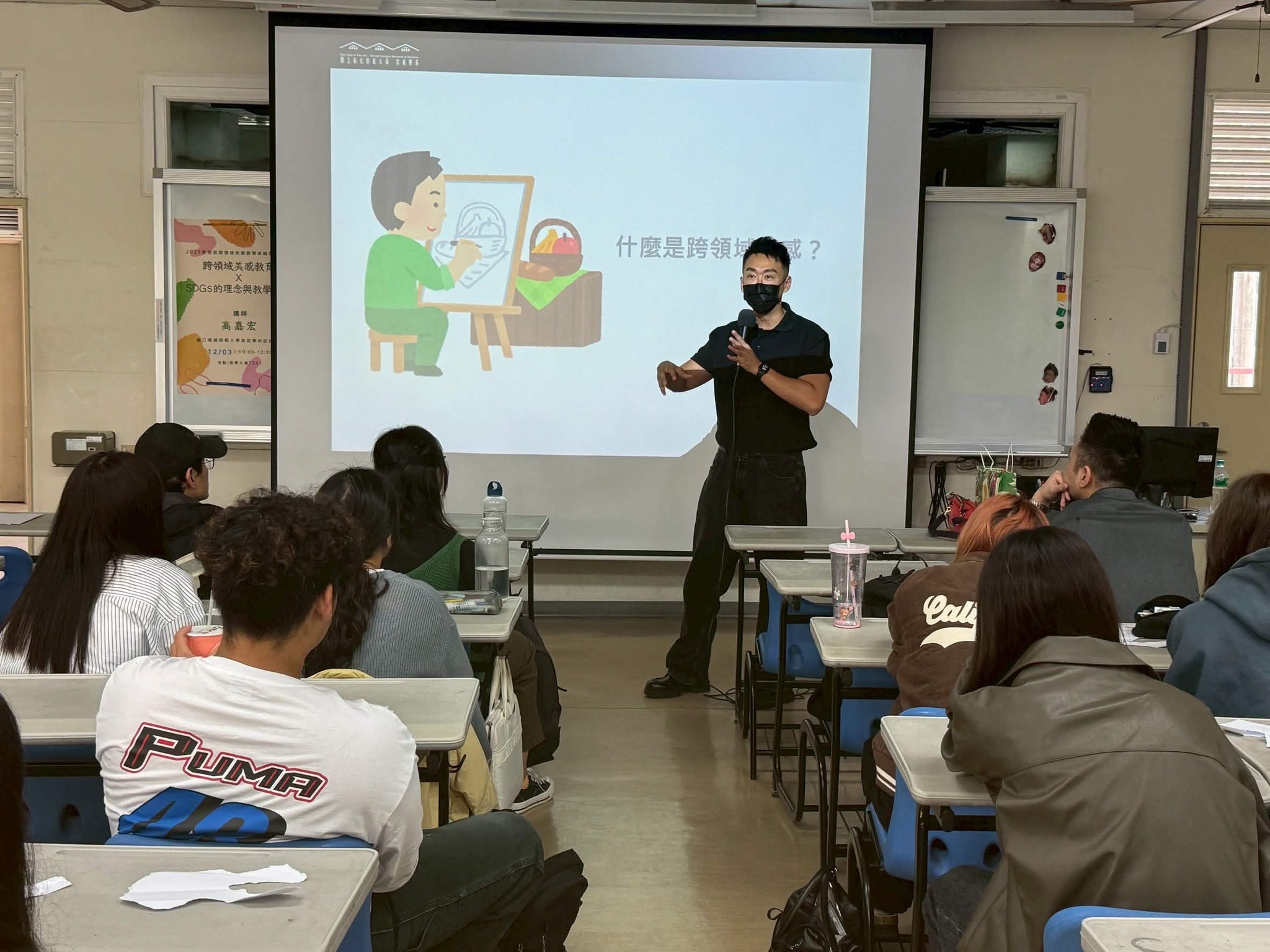
This course invited Professor Kao Chia-Hung from the Department of Fine Arts at National Kaohsiung Normal University to lead faculty and students in exploring the core spirit of "interdisciplinary aesthetic education" and considering how to connect aesthetic education with the SDGs (Sustainable Development Goals), core competencies, and curriculum design.
Throughout the course, Professor Gao shared her practical teaching experience, explaining that aesthetic education is not merely the content of art classes, but rather a crucial ability to cultivate students' observation of the world, understanding of issues, and creation of solutions. When aesthetics is integrated with different disciplines, social issues, and life experiences, the classroom can become an important arena for students to reflect on public issues and the future world. In addition to sharing these concepts, the course also included hands-on and discussion activities, allowing teacher trainees to experience the possibilities of interdisciplinary curriculum design through "learning by doing."
➊ A4 Paper Structure Design Challenge
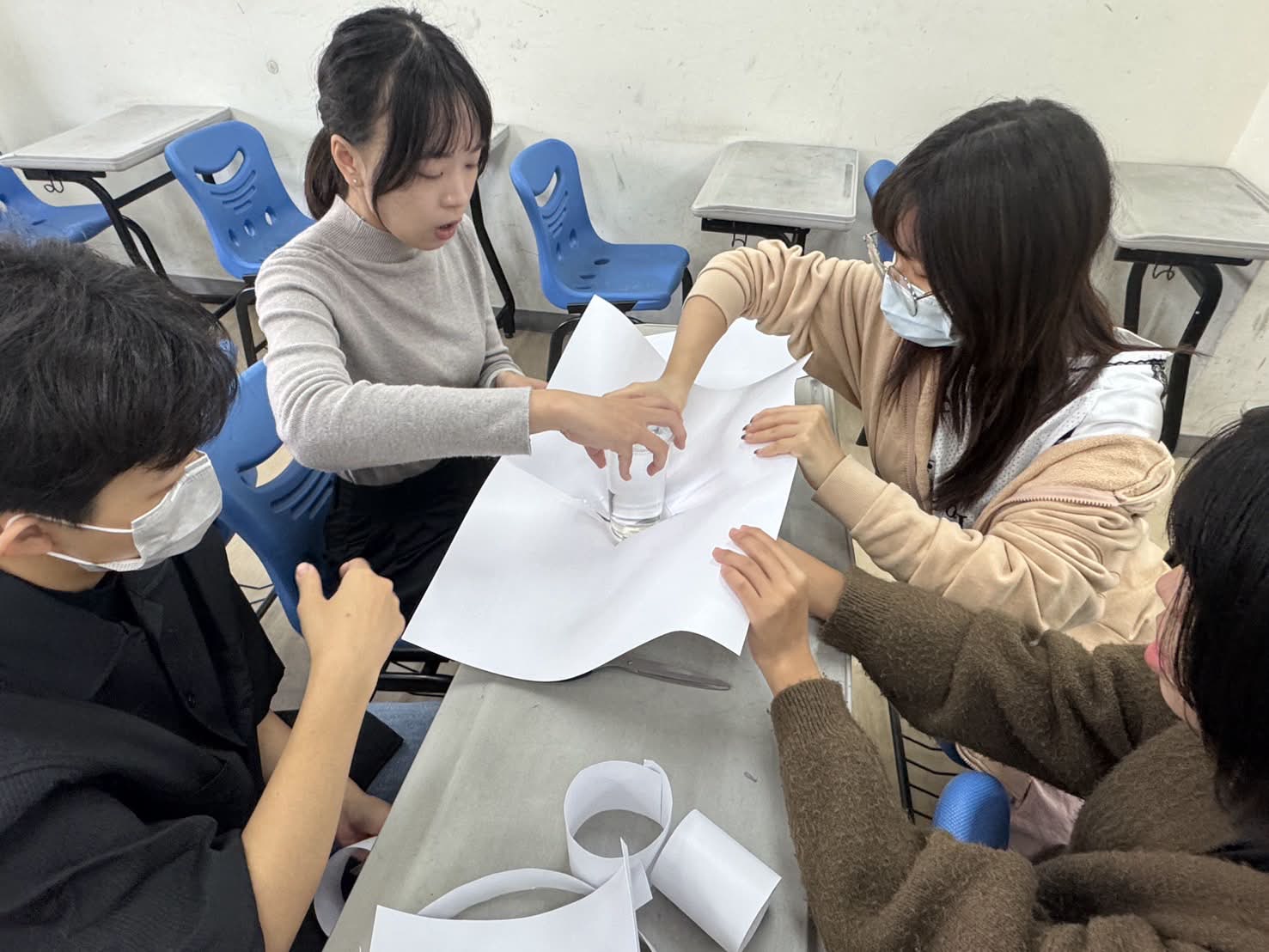
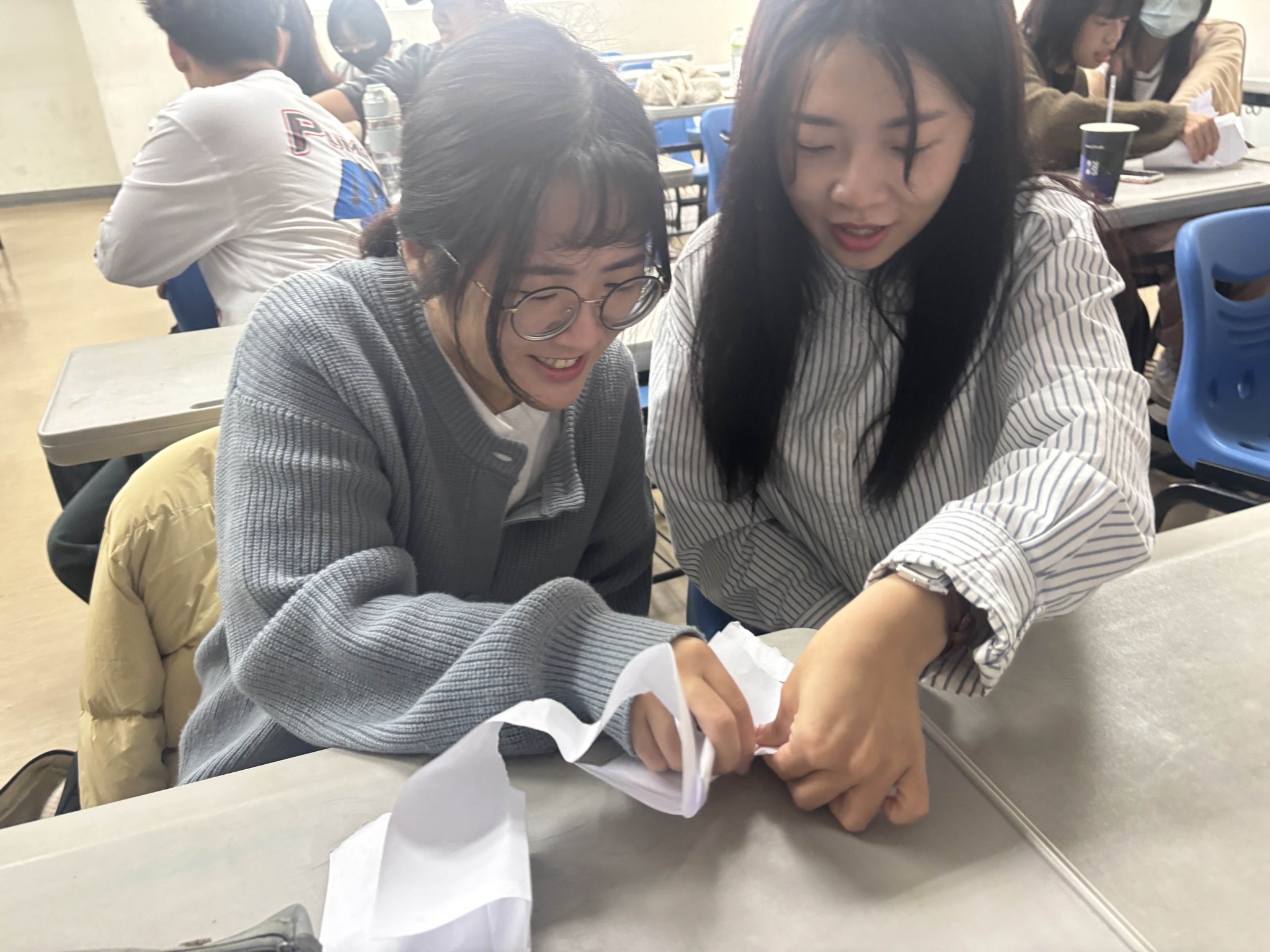
During the activity, Ms. Gao guided the students and teachers to fold, roll, cut, and design structures using a single A4 sheet of paper, attempting to create a three-dimensional structure capable of supporting a water cup. Through repeated testing and group discussions, everyone gradually understood concepts such as structural forces, stability, and center of gravity, and also developed creative design and problem-solving skills under limited material conditions. The seemingly simple task was actually full of challenges, with each test accompanied by tension and anticipation. When the water cup was successfully supported by the paper structure, exclamations and laughter filled the room, allowing everyone to experience the joy of design and collaboration in a relaxed atmosphere.
➋ Design Thinking × Aesthetic Observation
Throughout the practical process, Ms. Gao continuously encouraged everyone to rethink their design strategies through questioning and guidance, learning from each attempt and failure. The student teachers didn't just complete a project; they began to consider: how could such activities be brought into the classroom to guide students in observation, analysis, and creation?
This learning process echoes the resource sustainability and innovation spirit emphasized by the SDGs. Through simple materials and design thinking, students understand the importance of resource utilization and creative problem-solving, creating a new connection between aesthetic education and sustainability issues.
➌ Lesson plan examples and course extensions
At the end of the course, Ms. Gao shared several high school teaching case studies, demonstrating how to integrate interdisciplinary aesthetic education into different topics, such as bilingual education, gender issues, film and television literacy, and art criticism. Through the "4W1H" curriculum framework, students were guided from observation and analysis to expressing their viewpoints, allowing art learning to go beyond simply appreciating artworks and connect with real-life situations, extending to social issues and public discussions. Through this course, teachers and students not only understood the concept of interdisciplinary aesthetic education × SDGs, but also saw how to bring observation, reflection, and action into future teaching settings through creative activities and curriculum design.
When aesthetic education is linked to life experiences, social issues, and sustainable development, learning is no longer just the accumulation of knowledge, but a continuous process of understanding the world and creating change.