Cross-domain aesthetics, deep cultivation of local culture, and co-creation of a new educational landscape: The 114th Academic Year Taoyuan-Hsinchu-Miaoli District Cooperative School Achievement Sharing Meeting concluded successfully.
2026/07/23
News source:Normal University News>
When art enters life, and when courses respond to the land, education is no longer just the transmission of knowledge, but a process of learning together with the local community, engaging in dialogue with culture, and encountering life.
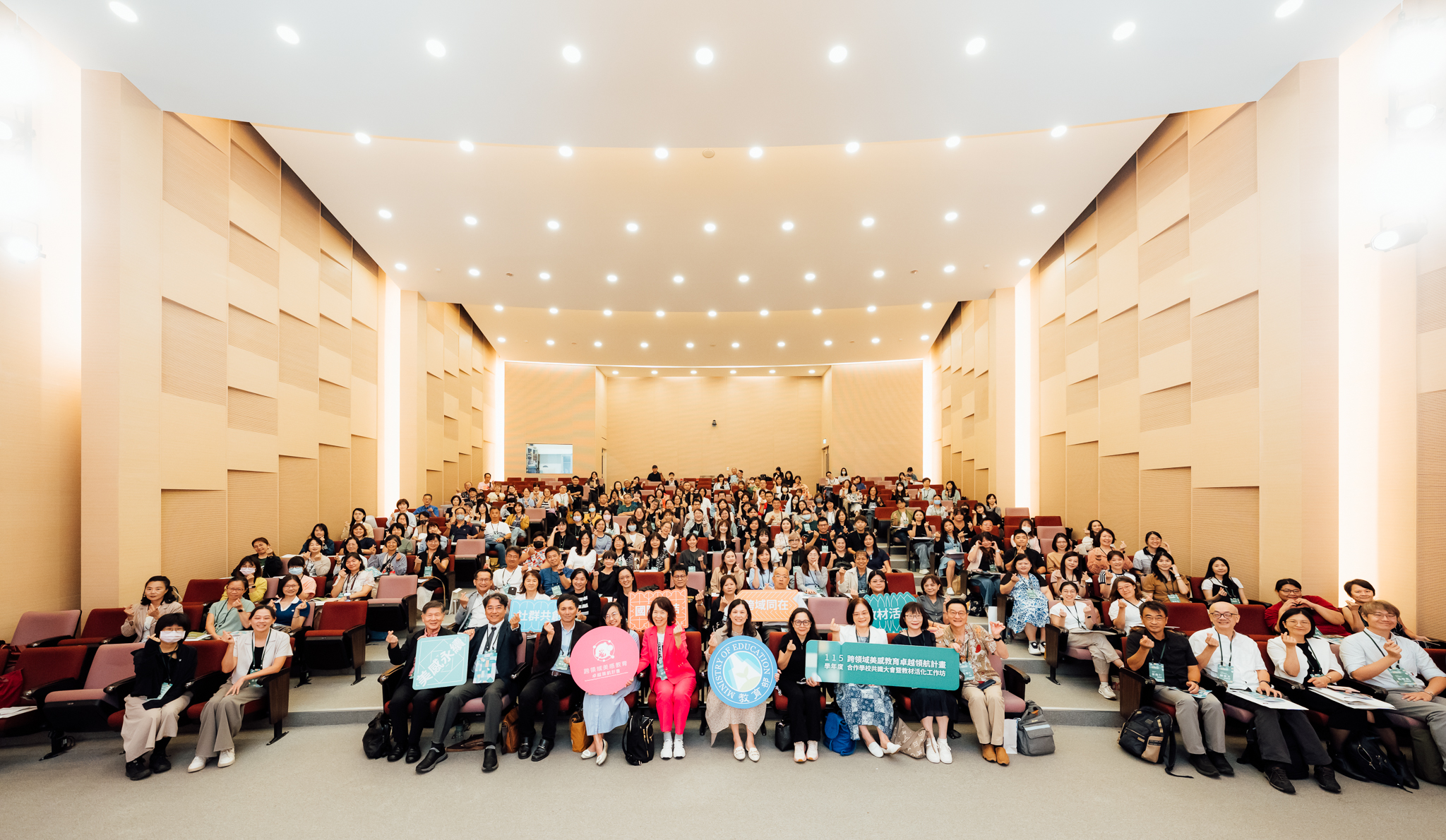
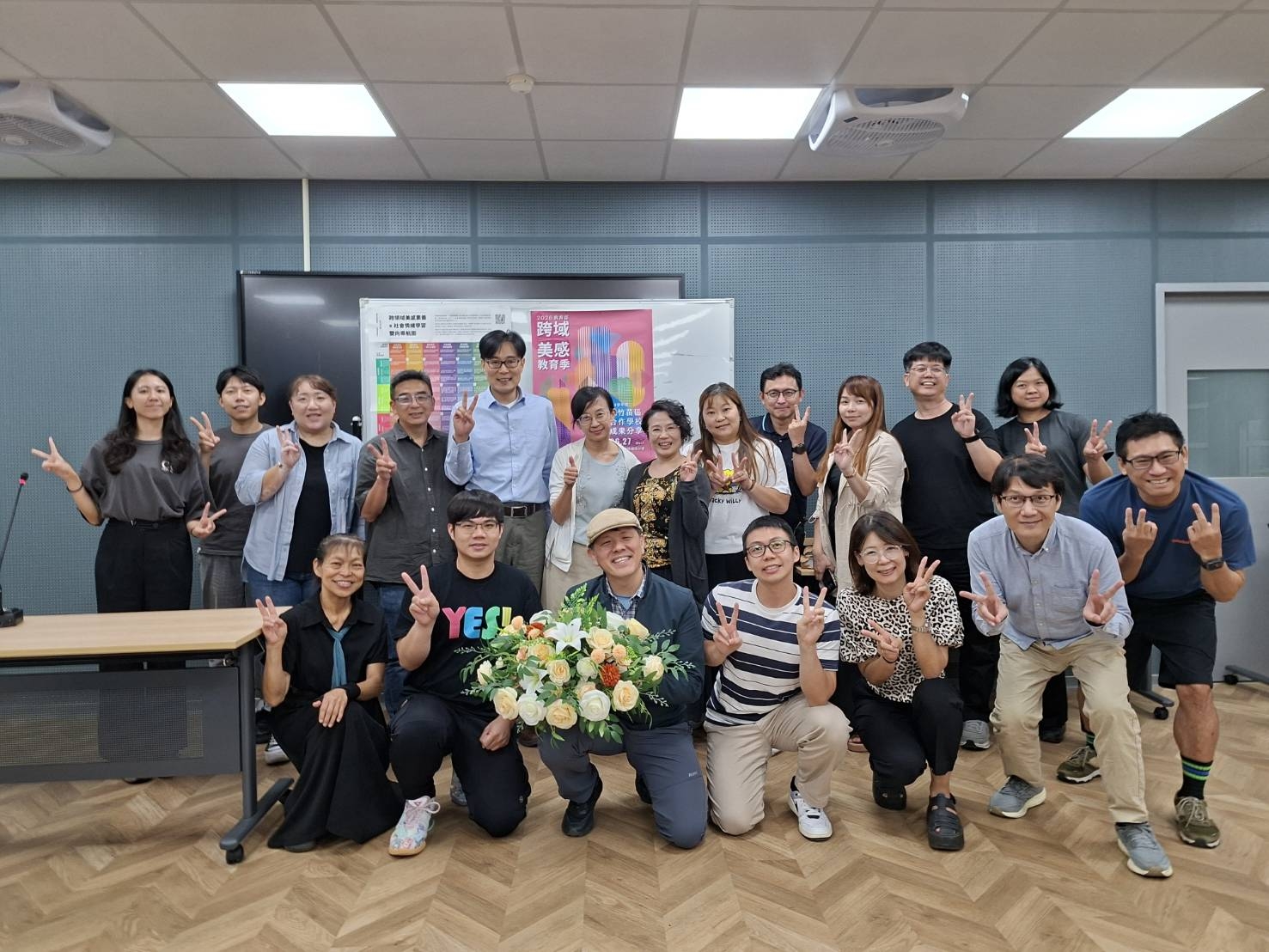
The Ministry of Education's "Interdisciplinary Aesthetic Education Excellence Leading Project" held its 2025 academic year Taoyuan-Hsinchu-Miaoli region partner school results sharing session on June 27th at Jianguo Elementary School in Taoyuan City. The event brought together 19 partner schools from Taoyuan, Hsinchu, and Miaoli counties to exchange ideas and share the practical results of their interdisciplinary aesthetic education courses over the past year. Each school, drawing on its land, culture, and life experiences, responded to environmental sustainability, technological development, and contemporary social issues, using art to connect different disciplines and guide students to rediscover themselves, understand their local communities, and imagine the world.
The event was opened by Associate Professor Chen Yun-wen, the co-host of the project, who then invited Associate Professor Luo Shi-long from National Tsing Hua University to share his practical experience in promoting interdisciplinary aesthetic education at the university level, bringing more thoughts and inspiration for interdisciplinary practices to the partner schools. Professor Chang Lien-chiang from National Taiwan University of Arts and Associate Professor Chen Meng-heng from National Tsing Hua University served as feedback committee members, further deepening dialogue and collaborative learning among inter-university professional communities through the exchange of experiences.
This sharing of achievements fully demonstrates the unique curriculum characteristics of each school, which are based on local contexts and respond to life. Ciwen Elementary School in Taoyuan City combines art, technology, and SEL (Student Learning Experience) to explore the possibilities of diverse learning; Taoyuan High School uses fallen leaves as teaching materials to guide students to think about environmental sustainability; Guanyin High School integrates algal reef issues with AI-generated technology to connect local ecology with digital creation; Zhongli Commercial High School develops interdisciplinary courses in business marketing to cultivate students' problem-solving abilities; Wuling High School learns about cultural heritage preservation through rubbing courses; Dazhong Elementary School connects local memories with tea culture; Shanfeng Elementary School develops local characteristic courses based on bubble tea; and Yangming Junior High School uses the Laokeng River as a site to explore the relationship between humanities and ecology.
The courses in Hsinchu County and City also demonstrate a strong connection to the local community. Zhudong Junior High School integrates forestry culture into its art activities; Jianguo Senior High School incorporates SEL into its curriculum design, focusing on students' social and emotional learning; National Tsing Hua University Affiliated Experimental Elementary School uses "wind" as its theme to guide students to explore nature and life across disciplines; Dahu Elementary School cultivates expression and critical thinking skills through marine sustainability courses; and Guanpu Elementary School and Jiafeng Elementary School start from campus architecture and daily life to cultivate students' aesthetic literacy and environmental observation skills.
Schools in Miaoli also showcased their rich creativity. Yongzhen Elementary School integrated mathematics, art, and SDGs to guide students to think across disciplines; Zhaonan Elementary School combined music and AI creation to explore new possibilities for technology and art; Jiaopu Elementary School deepened local identity through pond ecology and public art; and Xinyi Elementary School guided children to feel life and care for the environment through plant courses, allowing aesthetic education to respond to life and take root in the land.
Each course is not just a meeting of different disciplines, but also a starting point for students to connect with the local community and engage in dialogue with the world.
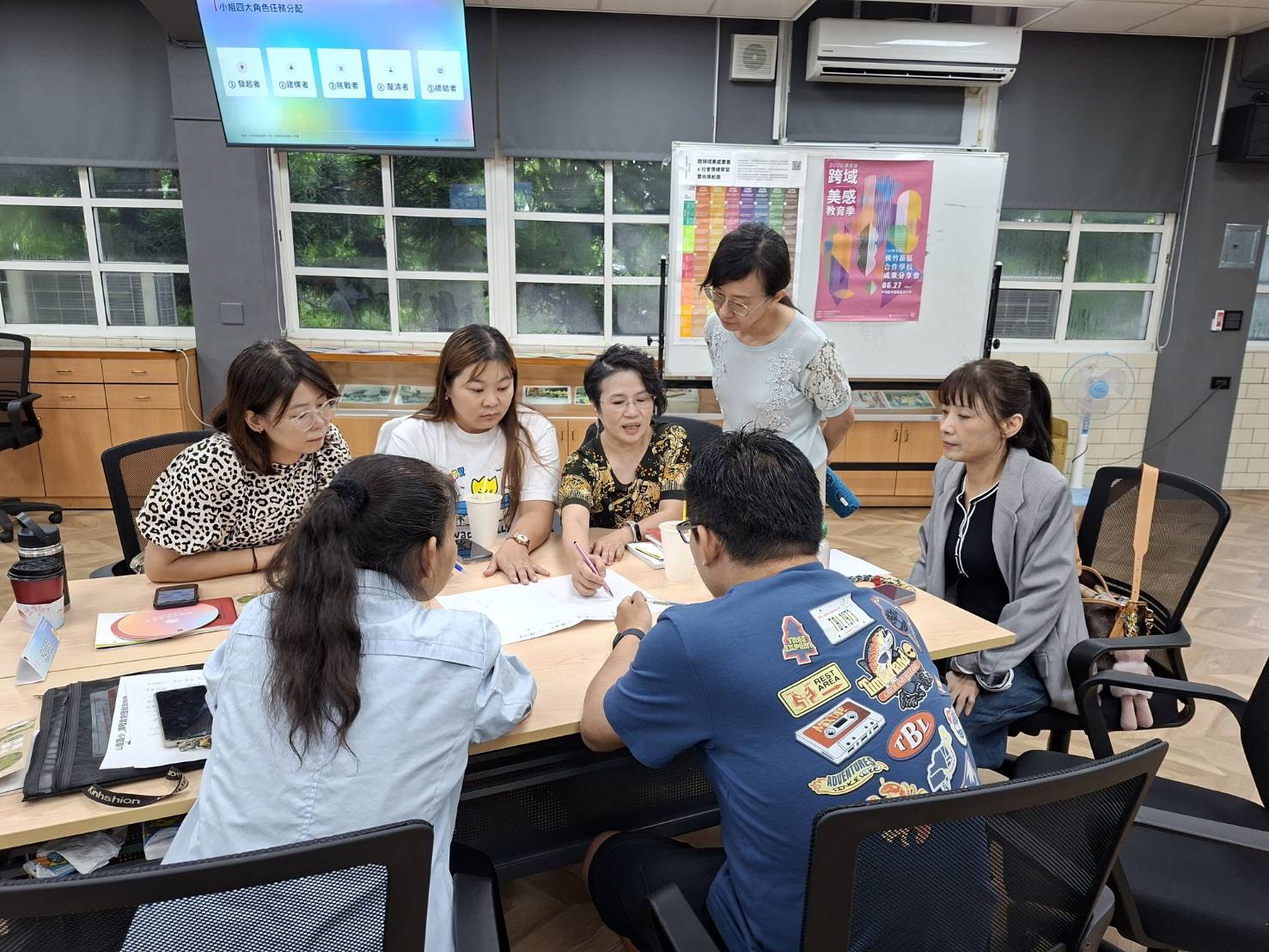
In addition to sharing course outcomes, participating teachers also engaged in group discussions to explore the question: "How can interdisciplinary aesthetic education reach new heights?" They discussed and exchanged ideas on various aspects, including curriculum design, teacher professional communities, and inter-school collaboration mechanisms, leading to more practical experiences and opportunities for cooperation.
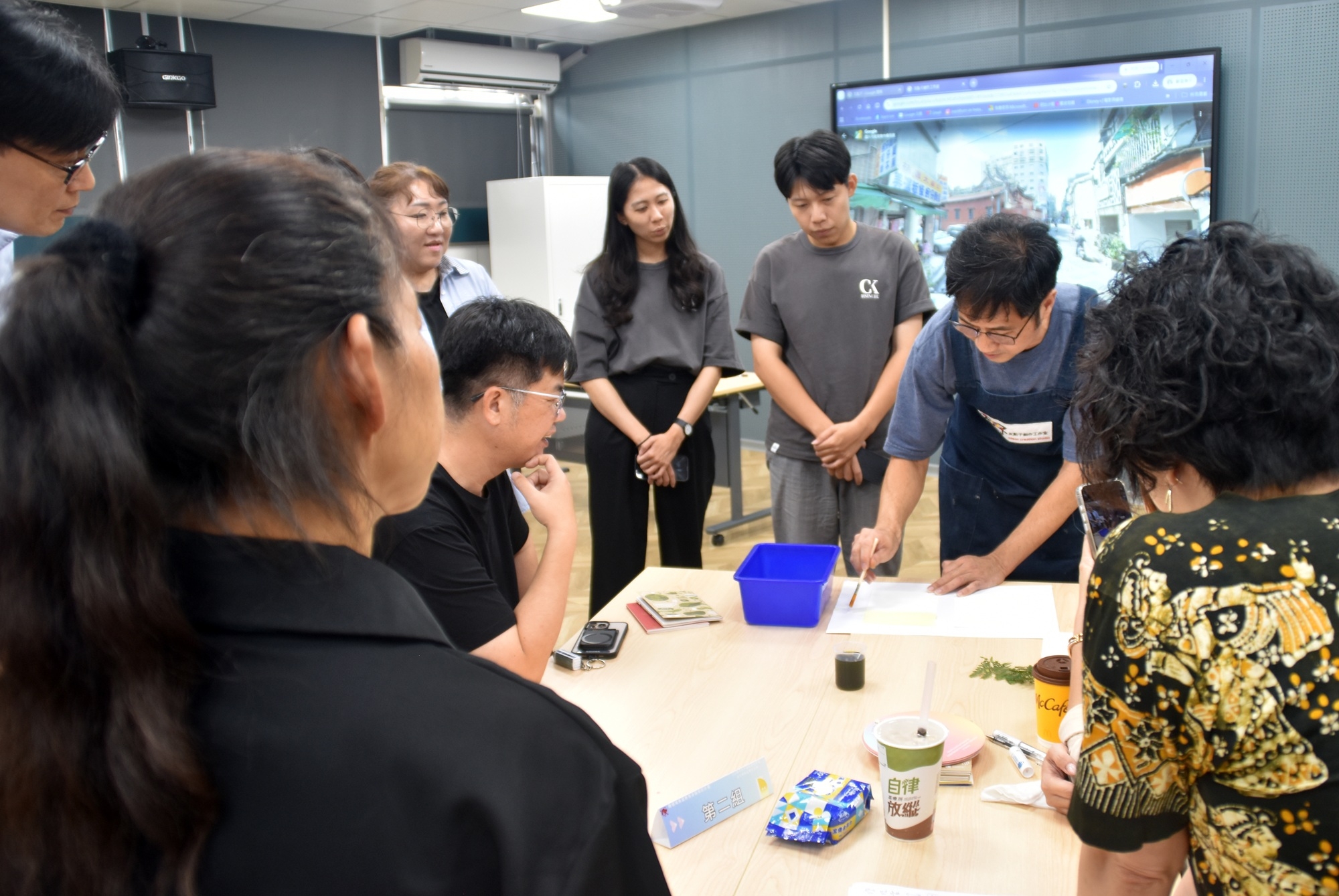
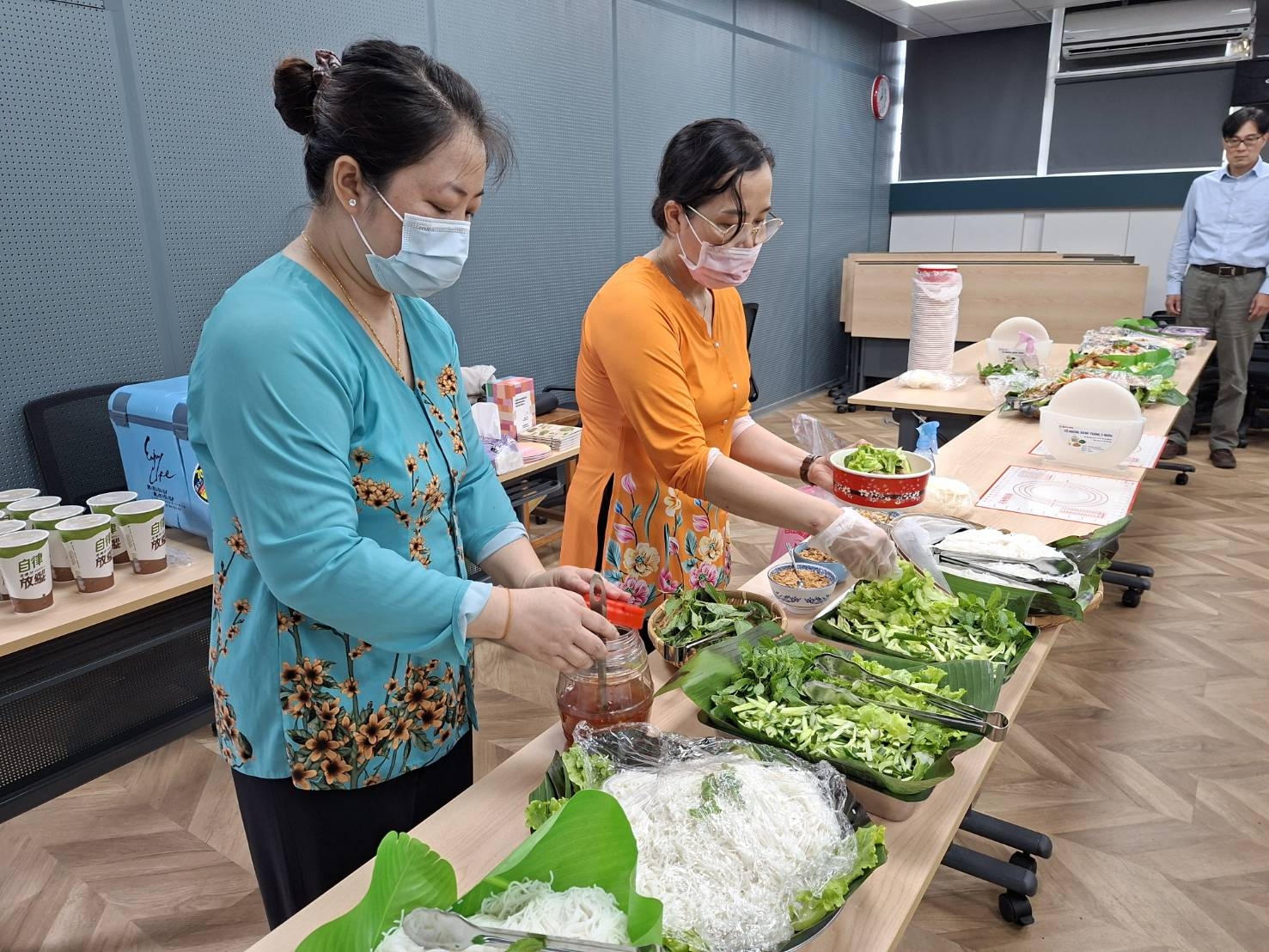
This event also invited Ms. Du Jinhuan from Wangjian Bookstore to share her insights on the culture of migrant workers and new immigrants in Taoyuan. She guided teachers to re-understand local society from different cultural perspectives, expanding the multicultural horizons of the educational setting. Vietnamese home-style dishes were specially prepared, inviting teachers to engage their senses through food, touching upon the cultural memories carried by the life stories of migrant workers and new immigrants through taste, aroma, and sharing. In the afternoon, Ms. You Yude from Jianguo Elementary School and Ms. Liao Xiumei from Dacheng Elementary School jointly led a cyanotype workshop. Teachers transformed fallen leaves collected on campus into cyanotype prints, preserving the most tender imprint of this interdisciplinary encounter with beauty.
At the end of the sharing session, one teacher expressed the shared sentiment of all participants by saying, "To be each other's fire, illuminating each other's future." Interdisciplinary aesthetic education is never just a change in a single course, but a journey of collaboration, listening, and co-creation among a group of educators. Through collaborative preparation, dialogue, and resource sharing, teachers ignite each other's inspiration and collectively accumulate energy for interdisciplinary practice. When the transformation of one school illuminates the path forward for another, interdisciplinary aesthetic education becomes more than just curriculum innovation; it becomes an educational landscape that slowly grows on the ground. (Source: Department of Fine Arts, Interdisciplinary Aesthetic Education Excellence Leadership Program)