2026 Ministry of Education's Overseas Study Program for Aesthetic Education Teachers—A visit to the Department of Art History at the University of Rome to explore the connection between art research and practice.
2026/11/11
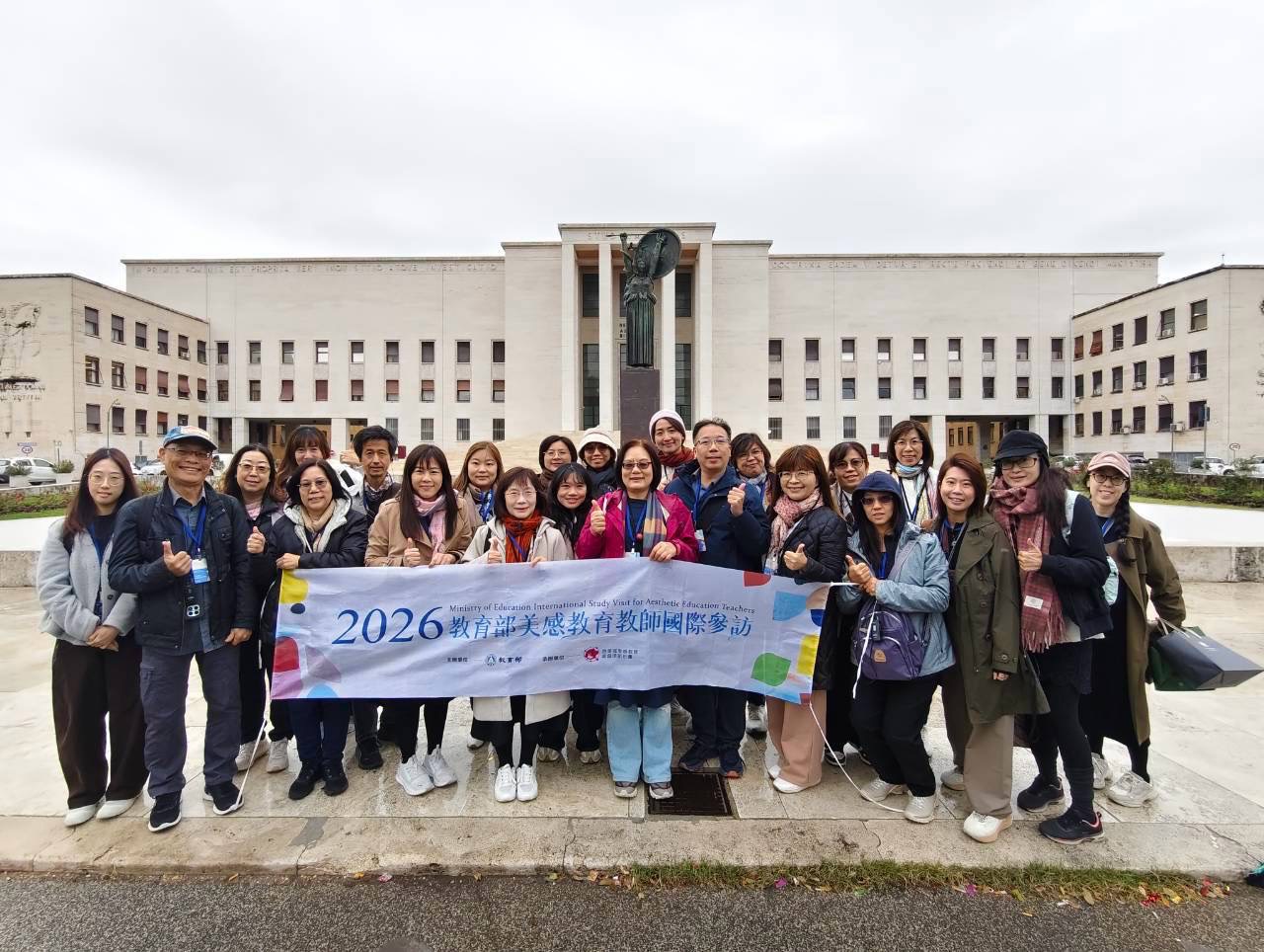
On November 6, the Ministry of Education's International Delegation for Aesthetic Education Teachers visited the Department of Art History at Sapienza University of Rome in Italy. They were received by Associate Professors Eliana Billi and Roberta Cerone. Through visits to the Museum of Contemporary Art, historical mural restoration projects, and art archives, the delegation gained a deeper understanding of how the university integrates art history research, curatorial practice, and cultural heritage preservation into its teaching, allowing students to participate in real-world art-related work beyond academic knowledge.
Upon entering the campus of Sapienza University of Rome, the two professors first introduced the plaza in front of the main building. Although it was raining that day and the plaza appeared empty, it is usually an important public space for students to gather, exchange ideas, and engage in activities. This campus planning made the visiting teachers realize the role that public spaces play in university life. The plaza and atrium provide places for students to meet naturally and exchange ideas, making discussion and interaction an integral part of daily campus life.
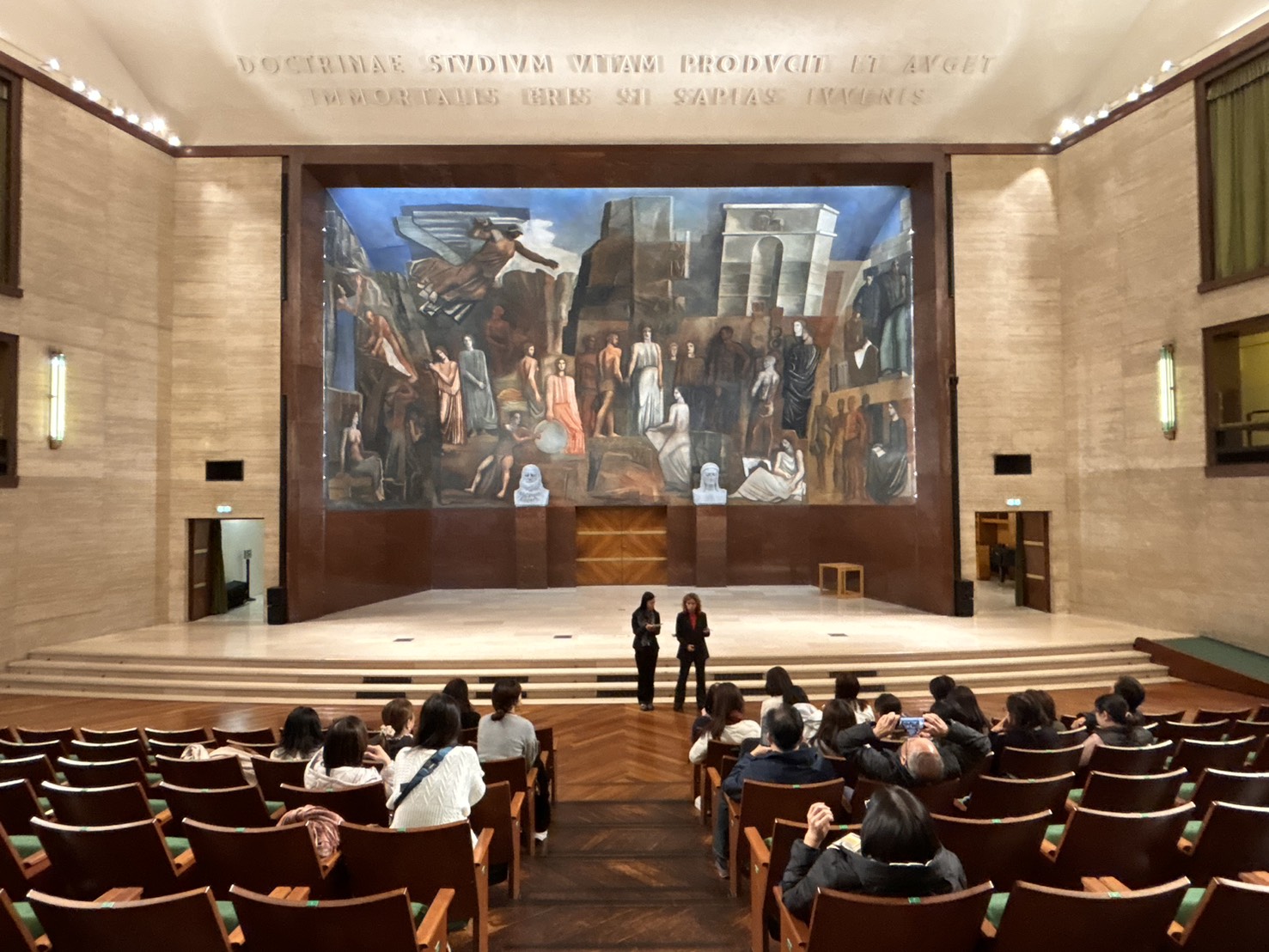
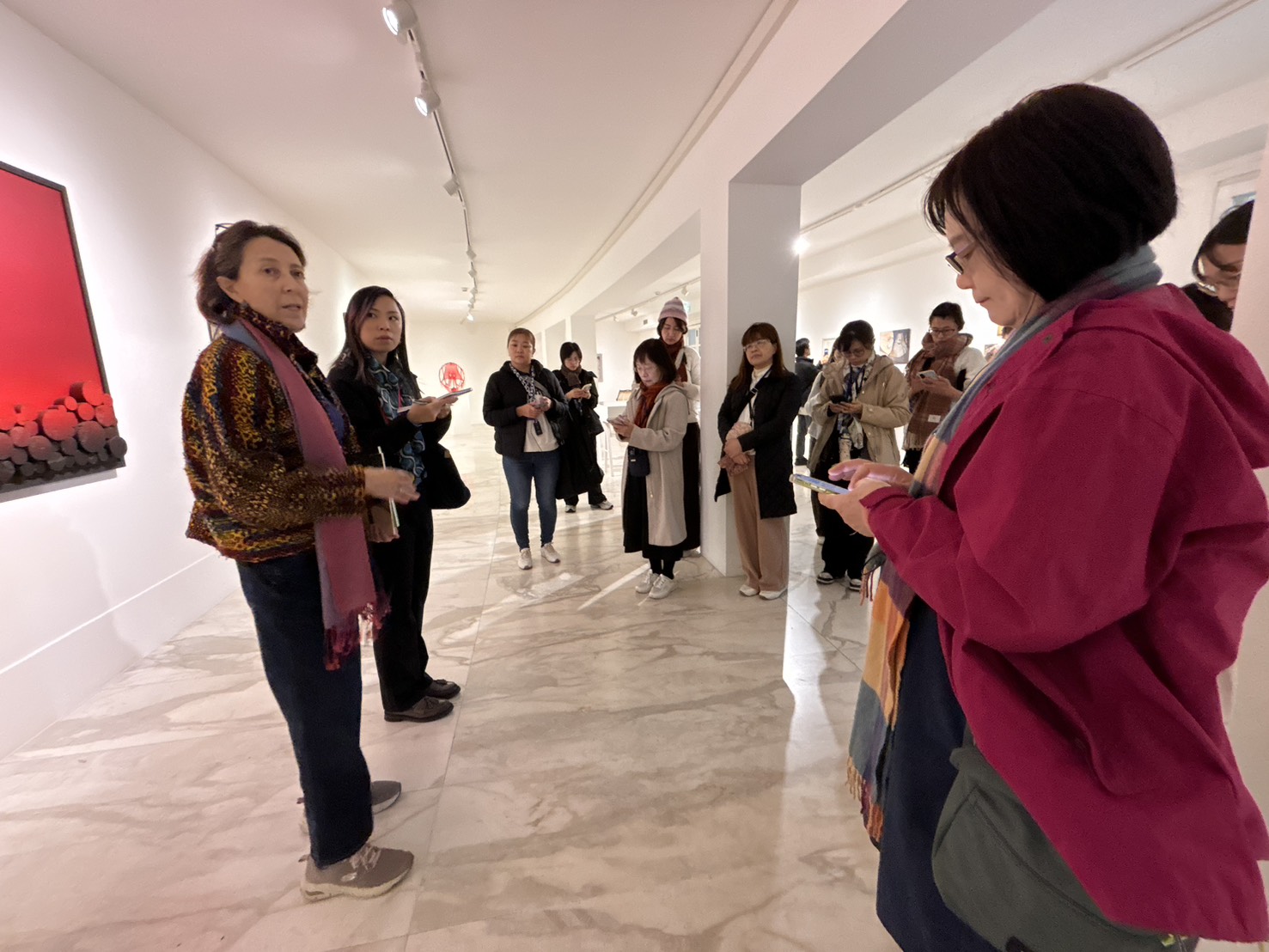
The delegation first visited the Museum of Contemporary Art at the University of Rome. Opened in 1987, the museum is one of the earliest contemporary art exhibition venues in Rome. Its initial purpose was to respond to the development of contemporary art and to provide a space for faculty and students to engage with contemporary art and participate in artistic practices.
The museum collaborates with professionals such as artists, art critics, and curators, while also allowing students to participate in exhibition planning and execution. From exhibition content research and curatorial work to social media management and media communication, students have opportunities to participate hands-on, understanding the different disciplines involved in an exhibition from conception to presentation. The museum also provides students with curatorial space, allowing art historical research to engage with the audience through exhibitions.
The exhibition we visited was a solo exhibition curated by graduate students focusing on the artist Renata Risorta. Through researching the artist's creative trajectory and the characteristics of her works, the students further transformed their academic research into exhibition content, practicing all aspects of curatorial work from selecting works and arranging the display to the audience's viewing experience. During the exchange, it was also mentioned that artists sometimes proactively extend collaboration invitations, while the museum more often finds collaborators through curator recommendations, prioritizing the originality of the works and whether they have been exhibited in Rome before.
This operational model allowed faculty members to see that university exhibition spaces can serve as important platforms connecting academic research and the art industry. During the visit and exchange, Professor Huang Chun-min also shared the experience of the National Taiwan Normal University's Dequn Gallery, which, through its on-campus exhibition spaces and the National Taiwan Normal University Art Museum's collection and exhibition curation, also provides students with opportunities for solo exhibitions and curatorial practice. The exchange of experiences between the two universities also prompted faculty members to further consider how universities can utilize their own resources to support students in accumulating professional art experience.
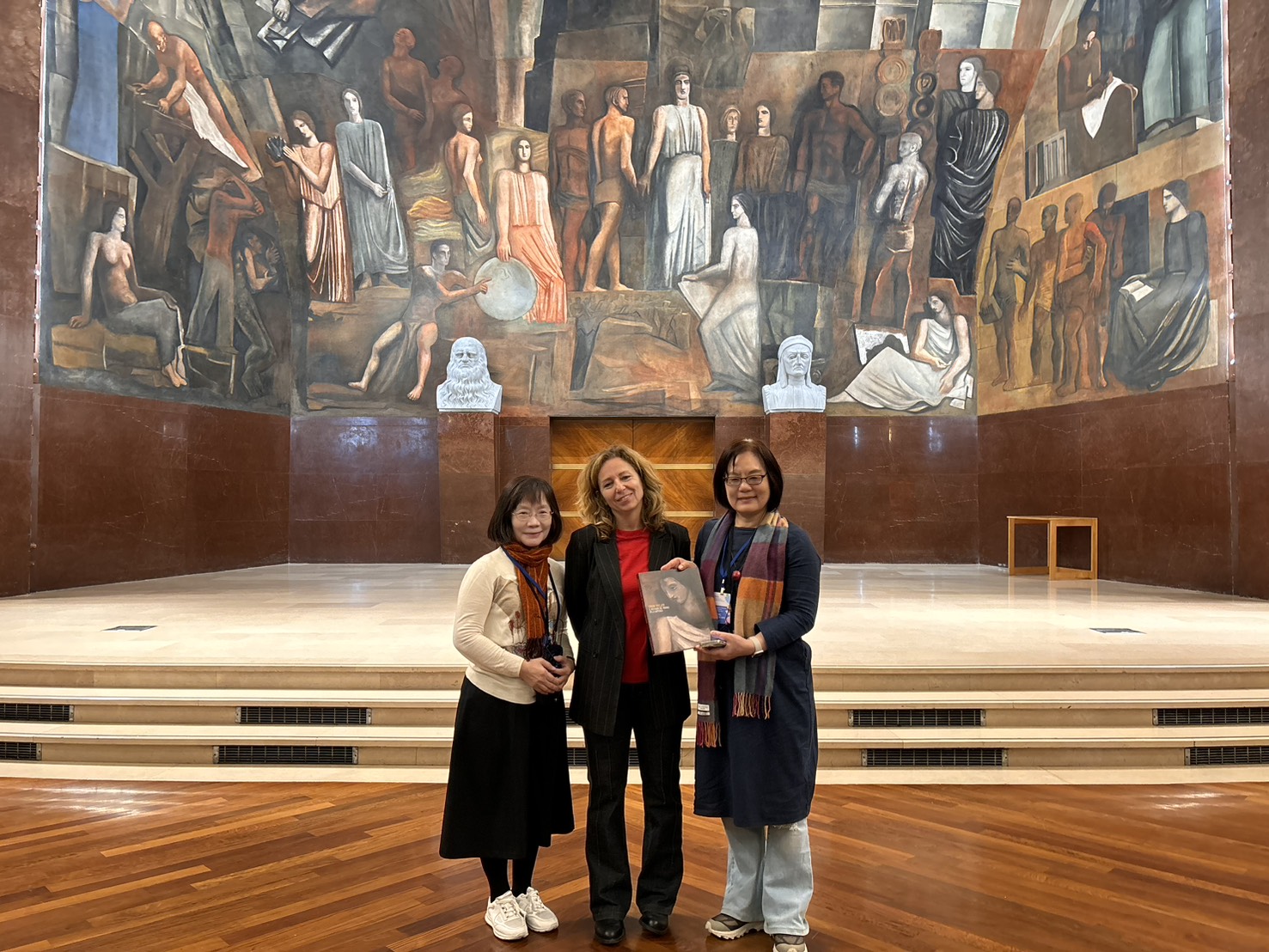
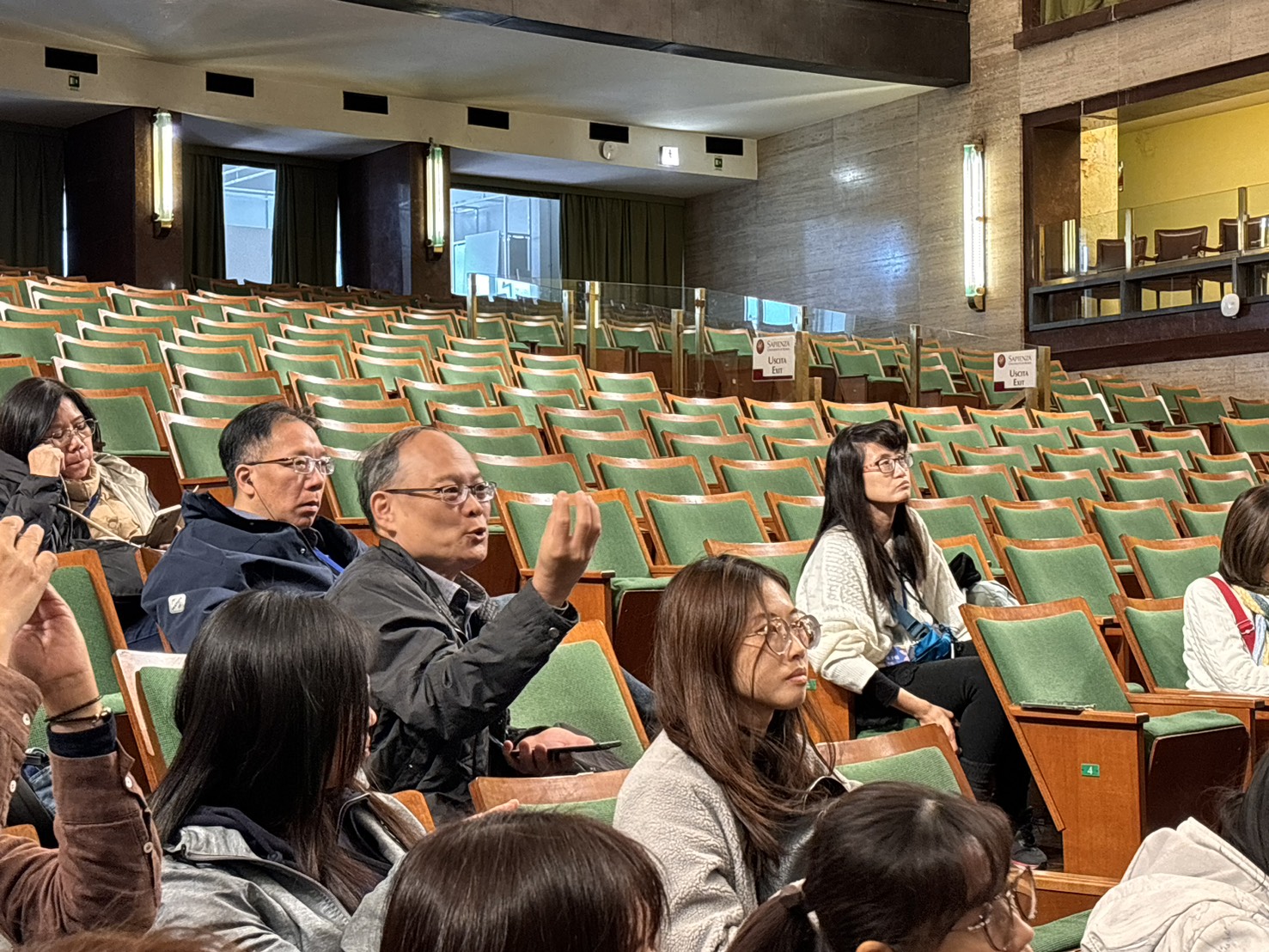
Another important part of the visit was a presentation by Associate Professor Eliana Billi, a restorer and art historian, on the auditorium mural restoration project she led, titled "L'Italia fra le arti e le scienze" (The Italy Between Art and Science). This mural, created by Italian artist Mario Sironi (1885–1961), covers an area of over 100 square meters and is one of the most important works for understanding 20th-century Italian art and political history.
The mural, created during Mussolini's rule, depicts the nation's imagery through anthropomorphic Italian figures and contains political symbols of the fascist regime. Following the end of World War II and the collapse of the fascist regime, the work could no longer be publicly displayed due to its political context, and the school covered it with large wallpaper panels. Later, there were plans to re-exhibit it, but to avoid depicting fascist symbols, another artist was commissioned to cover the original, resulting in the work undergoing alterations and concealment over different periods.
Associate Professor Billi further explained the research process for this restoration project. Before restoration, the team collected and analyzed data from various perspectives, including art history, creative background, and symbolic imagery, and then provided the research findings to the restorers as a basis for the restoration. Because the mural involves complex historical and political contexts, the restoration process required discussions among different professionals, including historians, the original artist, and the school administration. After several discussions, the team decided to remove the second layer of painting that had been added later, thus restoring the original mural.
This restoration work also raises a thought-provoking question: how should artworks with controversial historical backgrounds be preserved and displayed? The political symbols presented in the murals are not only part of the artistic creation of their time, but also reflect the ideas and values within a specific historical context. Through restoration and research, viewers can understand the original appearance of the works and further understand how postwar Italian society re-examined this history.
For younger generations who did not experience World War II, this mural provides a concrete medium for viewing history. The university also plans to set up a museum exhibition space related to the mural in the auditorium, allowing visitors to understand the process of the work from its creation and covering to its restoration through historical documents, the context of the work, and restoration records. The museum's planning will also involve faculty and students, so that research results can be continuously transformed into exhibition and teaching resources, forming a connection between theoretical research and practical work.
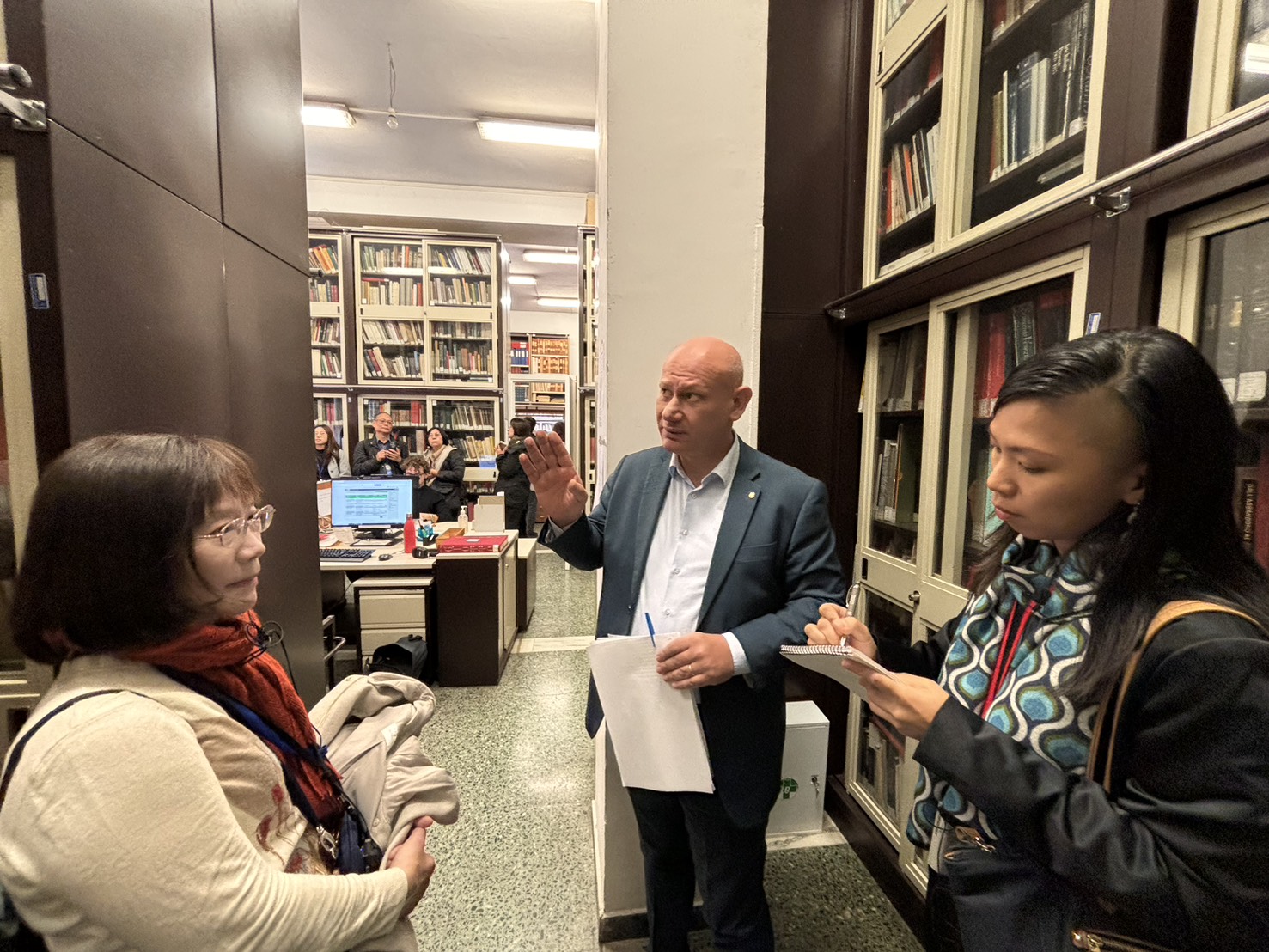
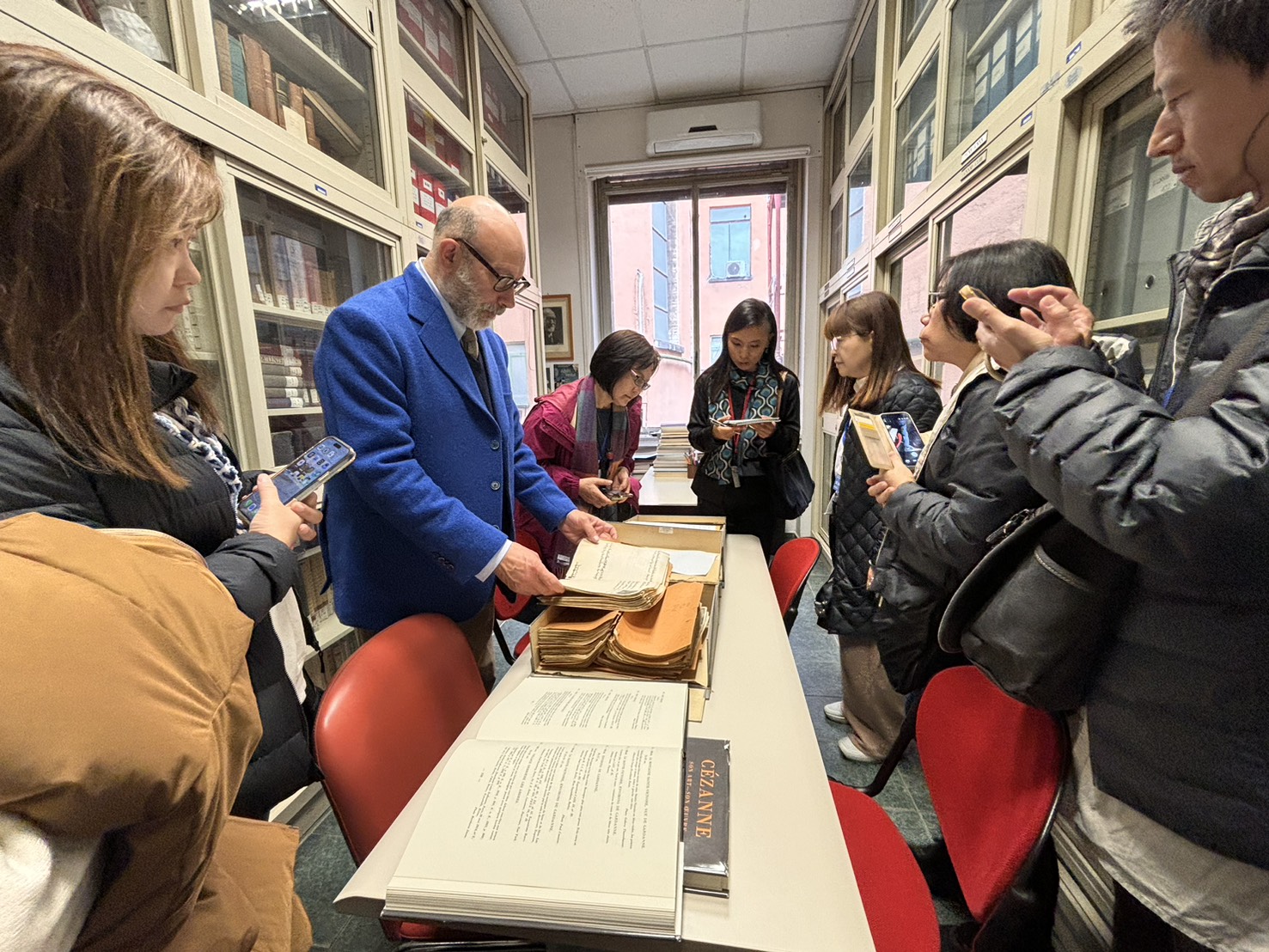
In addition to the Museum of Contemporary Art and the mural restoration project, the delegation also visited the Art History Archives and Library to learn about the school's resources in the preservation, research, and transmission of art materials. From original documents and artwork data to restoration research records, these collections not only support academic research but also give students the opportunity to build a deeper understanding of art history through firsthand materials.
Following their visit and exchange at the University of Rome, the faculty members gained a deeper understanding of the relationship between art and history. Artworks from different eras are all responses by their creators to the society, culture, and living environment of their time. When these works enter the processes of research, curation, and restoration today, they are also interpreted in new ways by viewers from different eras. Art history, therefore, is an important pathway to understanding social change, cultural memory, and human thought.
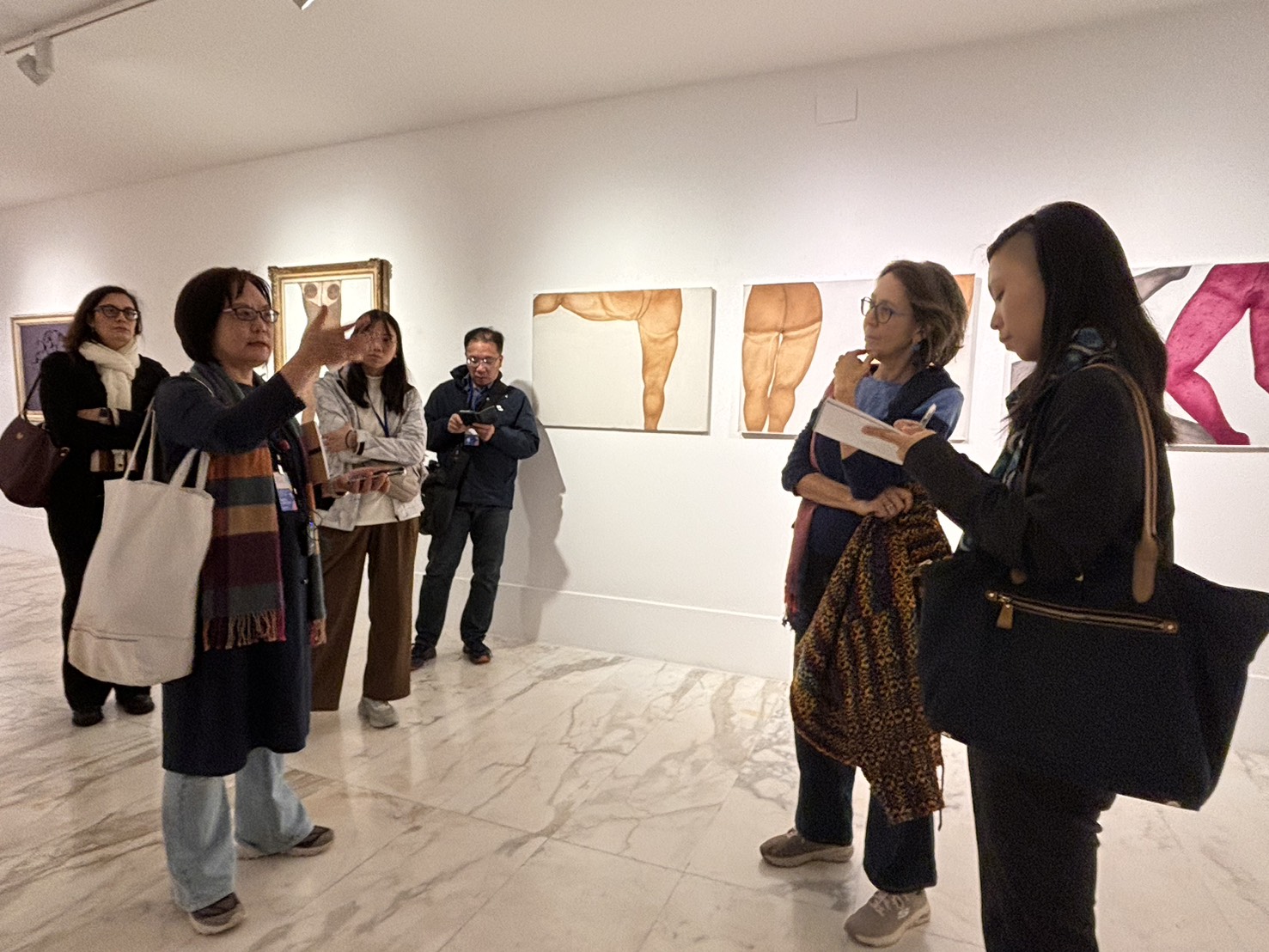
Furthermore, through this visit, the teachers observed that discussion and exchange are universally emphasized across all educational levels in Italy. Whether it's plazas and courtyards on university campuses, or public activity spaces provided by different schools, students have opportunities to freely gather, exchange ideas, and create a natural discussion atmosphere. These spatial arrangements also prompted the teachers to reflect on Taiwan's campus environment and teaching culture: How can the planning of public spaces increase opportunities for students' independent communication and make questioning, discussion, and sharing of viewpoints a part of daily learning?
From contemporary art curation and historical fresco restoration to archival documentation, the visit to the University of Rome showcased the diverse facets of art research and practice. Through interdisciplinary collaboration, artworks were re-examined, preserved, and reinterpreted, while students gained experience within authentic cultural contexts. These observations brought back new curricular reflections for the visiting faculty and extended the experience of international exchange to the teaching practices of aesthetic education in Taiwan.